
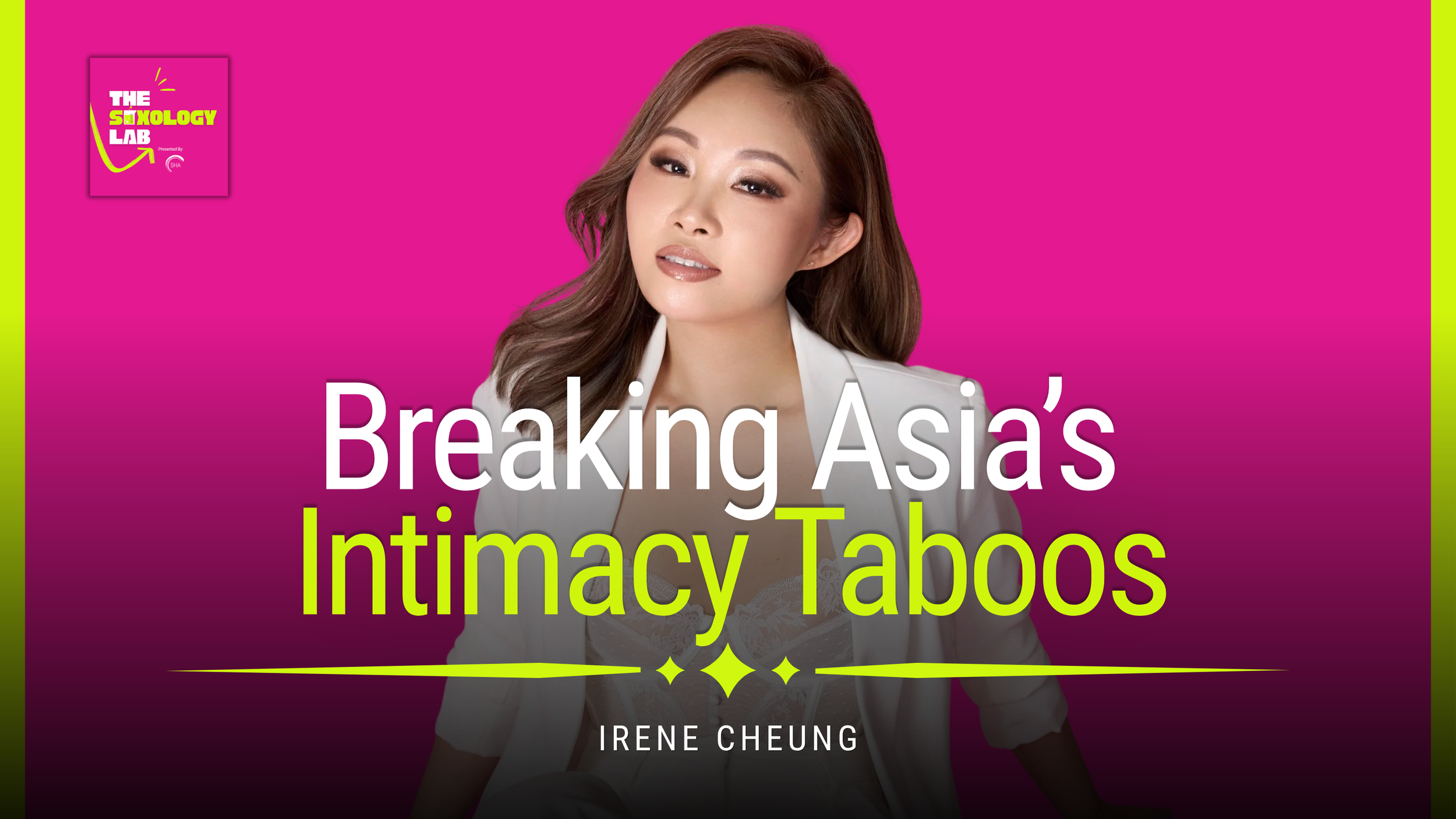
What happens when you decide to build a career talking about sex in a place where people rarely discuss it openly?
For sex coach Irene Cheung, the answer involves challenging cultural expectations, navigating social media censorship, educating people who learned about sex from pornography, and helping clients discover that their sexual experiences don't make them abnormal.
But Irene's journey into sexual health began with something much more personal.
For years, she struggled to experience orgasm with a partner, even though she could orgasm during masturbation. She sought help from doctors, therapists, and coaches, wondering whether something was wrong with her.
That experience eventually led her to a new career, a podcast, and a mission to make conversations about sexuality more accessible in Hong Kong.
In Episode 35 of The Sexology Lab, host Michelle Melville-Kashon sits down with Irene to discuss what it's really like to become a sex coach in Hong Kong, why sexual shame remains so powerful, and how she is building a community around sexual-health education.
They also explore an issue that affects sexual-health professionals around the world: How do you build a sustainable career teaching people about sex when the platforms you depend on restrict the very subject you're trying to discuss?
What This Episode Explores
"It's like I finally found and aligned that mission and purpose in my life." - Irene Cheung
Sexuality is influenced by much more than anatomy or physical attraction. Family expectations, cultural traditions, religion, media, gender roles, and access to education all influence how people understand their bodies and relationships.
Irene's work offers a perspective on how these influences intersect in Hong Kong.
In this conversation, Michelle and Irene discuss:
Why sex and intimacy remain difficult subjects to discuss openly in Hong Kong.
How traditional family expectations influence attitudes toward sexuality.
Why Irene became a sex coach after struggling with partnered orgasms.
How pornography creates unrealistic expectations about sexual performance.
Why women may struggle to communicate their sexual needs.
How men experience shame, erectile difficulties, and performance pressure.
What sex coaching offers and how it differs from other sexual-health professions.
The challenges of creating sexual-health content on YouTube and Instagram.
How Irene built her podcast, Playtime Talk.
What it takes to build a financially sustainable sex coaching business.
Why professional education and international networking matter.
Irene's hopes for the future of sex education in Hong Kong.
The conversation reveals how sexual shame can affect people across cultures, while also highlighting the opportunities available to professionals willing to challenge it.
Meet Irene Cheung
"There is no normal. Everyone is uniquely their own being."- Irene Cheung
Irene Cheung is a Hong Kong-based sex coach, sexual-health content creator, and host of Playtime Talk, a podcast exploring intimacy, sexual pleasure, misconceptions, and cultural taboos.
Although Irene is based in Hong Kong, she spent much of her life in Toronto before returning to her family's roots.
With two business degrees and experience in brand management, she initially pursued a career outside sexual health. She also helped establish a beauty salon, where she discovered something unexpected.
While providing intimate beauty treatments, clients began opening up about their relationships, sexual concerns, and experiences with intimacy.
These conversations revealed how difficult it was for many people to find a comfortable place to discuss sexuality.
Combined with her own experiences seeking help for partnered orgasm difficulties, those interactions inspired Irene to pursue sex coaching.
She enrolled in the Sexual Health Alliance Sex Coach/Sexologist Certification to develop her professional knowledge and practical skills.
Today, Irene works primarily with men in Hong Kong, helping them reconsider sexual performance expectations, understand their partners' pleasure, and develop healthier approaches to intimacy.
Through coaching, social media, and Playtime Talk, she is also working to build a broader community of sexual-health professionals and educators.
3 Key Takeaways
"This is entertainment, it's not sex education." - Irene Cheung
1. Sexual Shame Can Affect Both Partners, but in Different Ways
Irene describes a culture in which women may be discouraged from expressing sexual desire while men are expected to demonstrate masculinity through sexual performance.
For women, this can create pressure to prioritize a partner's pleasure, conceal discomfort, or pretend to experience orgasm.
For men, it can create anxiety about erections, sexual performance, and whether they are satisfying their partners.
Both experiences can interfere with honest communication.
Sexual confidence begins with understanding that pleasure isn't a performance and that everyone deserves space to communicate their needs.
2. Pornography Is Entertainment, Not a Complete Sexual Education
Many of Irene's clients have learned about sex primarily through pornography.
This can create unrealistic expectations about how bodies respond, how orgasms look, and what sexual performance should involve.
Irene encourages clients to recognize the difference between staged sexual entertainment and real-life intimacy.
Instead of relying on visual cues or assumptions, partners can benefit from asking questions, discussing preferences, and learning about one another's experiences.
3. Building a Sex Coaching Career Requires More Than Passion
Irene's experience demonstrates that becoming a sex coach involves significant professional and financial investment.
She discusses certification, studying, practice clients, supervision, content creation, and building a client base.
She also explains why she is developing multiple revenue streams through coaching, workshops, events, sponsorships, and online courses.
For Irene, the rewards extend beyond financial success.
She describes finding a career that aligns with her values and allows her to contribute to meaningful cultural change.
Quick Answer: What Is It Like to Be a Sex Coach in Hong Kong?
Being a sex coach in Hong Kong can involve navigating cultural taboos, limited public discussion of sexuality, gender-based expectations, and social media restrictions on sexual-health content. In Episode 35 of The Sexology Lab, Hong Kong-based sex coach Irene Cheung describes helping clients address sexual shame, performance anxiety, communication difficulties, and misconceptions about pleasure.
Irene explains that her clients often have limited opportunities to discuss sexuality openly, and some rely on pornography for information about sexual behavior.
Her work combines individual coaching, sexual-health education, and public conversations through her podcast, Playtime Talk.
She also highlights the importance of professional training, supervision, community building, and sustainable business practices for people pursuing careers in sex coaching.
Why Is Sex Still Such a Taboo Subject in Hong Kong?
Traditional Family Values and Sexual Expectations
"You are allowed to also say no, and you are allowed to feel." - Irene Cheung
When Michelle asks Irene how sexuality is discussed in Hong Kong, Irene's response is revealing.
For many people in her experience, it simply isn't.
Irene explains that discussions about sex, relationships, and intimacy are often kept private, particularly within traditional family settings.
She identifies several influences, including traditional Chinese family expectations, religious schooling, and limited opportunities for comprehensive sexuality education.
In some families, masturbation is discouraged, sexual pleasure isn't openly discussed, and sexual activity is expected to remain within marriage.
These experiences aren't universal across Hong Kong, and Irene acknowledges that people who have lived abroad may have different perspectives.
However, she sees these attitudes influencing many of the clients and audience members she encounters.
The result can be a lack of language for discussing sexual needs, boundaries, and concerns.
People may experience difficulties but feel uncertain about where to seek help.
The World Health Organization recognizes that sexual health includes physical, emotional, mental, and social well-being. It also emphasizes that sexual health is shaped by cultural expectations, gender roles, and relationships.
That broader understanding helps explain why improving sexual health requires more than teaching anatomy.
It also requires creating environments where people can ask questions without shame.
Why Irene's Beauty Salon Became an Unexpected Space for Sexual Conversations
Before becoming a sex coach, Irene helped establish a beauty salon in Hong Kong.
While providing intimate hair-removal treatments, she began noticing that clients would share deeply personal information.
They talked about their relationships, sexual concerns, and challenges with intimacy.
Irene believes the private setting and existing trust helped clients feel comfortable opening up.
What surprised her was how many people seemed to need that opportunity.
For some, speaking with a beauty professional felt easier than raising sexual concerns with friends or family.
These experiences helped Irene recognize an unmet need for sexual-health conversations in Hong Kong.
She had already benefited from seeking professional support for her own intimacy concerns.
Now she began imagining how she could offer similar support to others.
Why More Open Sexual-Health Conversations Matter
When sexuality is treated as something that shouldn't be discussed, people may struggle to recognize when their experiences are common or when professional help is available.
They may rely on inaccurate information.
They may assume their partners know what they want.
Or they may interpret a sexual difficulty as evidence that something is wrong with them.
Comprehensive sexuality education can help address these gaps.
According to the World Health Organization's guidance on comprehensive sexuality education, effective education includes scientifically accurate, age-appropriate information about relationships, consent, bodily autonomy, sexual health, and communication.
For Irene, expanding access to this information is one of the most important goals of her work.
How Sexual Shame Affects Pleasure and Relationships
Why Irene Became a Sex Coach
Irene's interest in sexual pleasure developed from her own experience.
For years, she could experience orgasm during masturbation but struggled to do so with a partner.
She describes feeling frustrated and wondering whether something was wrong with her.
She sought help through medical professionals, therapy, and coaching.
Eventually, the process helped her better understand her body, her desires, and the psychological factors influencing her experiences.
One of the most important discoveries was recognizing how strongly she tended to prioritize other people's needs.
That pattern also appeared during intimacy.
She focused on her partner's pleasure, worried about how she looked, and struggled to communicate what she actually wanted.
Her experience illustrates why sexual pleasure isn't always a straightforward physical process.
Thoughts, emotions, expectations, relationship dynamics, and body image can all influence how someone experiences intimacy.
Irene wanted to help others explore these connections without assuming that difficulty experiencing orgasm automatically meant something was wrong with them.
Why Women May Struggle to Prioritize Their Own Pleasure
Irene describes seeing similar patterns among women in her audience.
Some feel uncomfortable looking at their bodies.
Others worry about whether they appear attractive during sex.
Many have learned to prioritize their partner's enjoyment rather than consider what feels pleasurable to them.
Irene connects these experiences to the influence of pornography, beauty standards, and cultural messages about how women are expected to behave sexually.
Michelle raises an important distinction during the conversation.
Women are often taught to think of themselves as objects of desire rather than active participants in their own sexual experiences.
That expectation can make it difficult to communicate preferences or explore new sensations.
Irene encourages women to begin with body acceptance.
Her advice isn't to immediately pursue orgasm or master a particular technique.
It's to become more comfortable with their own bodies and recognize that their pleasure matters.
Why Men Experience Sexual Performance Anxiety
Sexual shame doesn't only affect women.
Irene explains that most of her coaching clients are men, many of whom feel intense pressure to perform sexually.
Some believe that maintaining an erection is a requirement for being a good partner.
Others interpret temporary erectile difficulties as evidence that they are inadequate.
Irene describes a client who associated his ability to maintain an erection with being a good husband.
This belief places enormous pressure on sexual experiences.
Erections can vary for many reasons, including stress, fatigue, medication effects, health conditions, and emotional factors.
Occasional changes don't necessarily indicate a medical disorder. Persistent or distressing erectile difficulties, however, deserve evaluation by a qualified healthcare professional.
Irene encourages men to recognize that masculinity isn't defined by sexual performance.
They are allowed to experience emotions, communicate discomfort, and decline sexual activity.
They also deserve intimacy that doesn't revolve around proving themselves.
Why Pornography Isn't a Substitute for Sex Education
Unrealistic Expectations About Erections and Orgasms
One of Irene's biggest frustrations as a coach is the number of clients who use pornography as their primary source of sexual information.
She explains that many of her male clients have learned sexual techniques from Japanese pornography.
Some expect real-life experiences to resemble what they see on screen.
They may assume that erections should always be immediate and consistent.
They may also believe that a partner's facial expressions, moaning, or physical reactions provide definitive evidence of orgasm.
But sexual entertainment doesn't necessarily represent how people experience pleasure in everyday relationships.
Pornography is produced for an audience.
It isn't designed to provide comprehensive instruction about communication, consent, sexual anatomy, or individual preferences.
Irene has even created educational content examining pornography and discussing the difference between staged portrayals and real-life sexual experiences.
Her goal is to help viewers develop more realistic expectations.
Why Communication Matters More Than Guessing
Michelle asks Irene why people don't simply ask their partners whether they enjoyed an experience.
Irene explains that the problem often involves both partners.
One person may assume their partner had an orgasm based on their reactions.
The other may feel embarrassed about admitting that they didn't.
Some people pretend to orgasm because they don't want to disappoint their partners.
Others avoid discussing sexual preferences because they fear criticism.
Over time, these patterns can become difficult to change.
Partners repeat familiar activities without knowing whether both people enjoy them.
Irene encourages clients to replace assumptions with conversations.
That includes discussing what feels pleasurable, what doesn't, what someone wants to explore, and whether both partners feel comfortable.
Consent and communication are not simply preliminary steps before sexual activity.
They are ongoing parts of a healthy sexual relationship.
For more conversations about desire and communication, explore The Sexology Lab's episode library.
The Difference Between Sexual Performance and Sexual Satisfaction
A major theme throughout Irene's conversation is the difference between performing a sexual role and experiencing genuine satisfaction.
Someone can appear sexually confident while feeling anxious or disconnected.
A person can maintain an erection without necessarily enjoying an experience.
Someone can display behaviors associated with orgasm without actually having one.
Sexual satisfaction depends on more than outward appearances.
It can involve comfort, connection, communication, stimulation, and the ability to express personal preferences.
This is why Irene challenges clients to reconsider what makes someone a good sexual partner.
Instead of focusing exclusively on performance, she encourages attention to mutual pleasure and emotional connection.
What Does a Sex Coach Actually Do?
Sex Coaching vs. Sex Therapy
Irene frequently receives questions about the differences between sex coaching, sex therapy, counseling, and education.
These professions can address related topics, but they have different scopes of practice, training pathways, and responsibilities.
Irene was particularly drawn to coaching because she wanted to help clients explore pleasure, intimacy, and their relationship with their bodies.
Her approach focuses on supporting clients as they develop greater self-awareness and practical communication skills.
Sex therapy, by comparison, involves clinical assessment and treatment within the practitioner's licensed scope of practice.
Sexuality counseling and education may emphasize other aspects of sexual well-being, depending on the professional's training and credentials.
These distinctions matter because not every sexual concern can be addressed through coaching alone.
Medical symptoms, significant psychological distress, trauma-related concerns, and other clinical conditions may require treatment from appropriately licensed professionals.
For people interested in developing a career in this field, Sexual Health Alliance offers education and certification pathways in sex coaching, sex therapy, sexuality counseling, sex education, and sexology.
Why Clients Are Afraid to Ask Certain Questions
Irene says some of the most difficult questions clients ask involve whether their experiences are normal.
They may worry that a fantasy, preference, or sexual concern makes them unusual.
Some avoid asking questions entirely because they're afraid of being judged.
Irene tries to create an environment where clients feel comfortable discussing these experiences.
Her approach emphasizes curiosity rather than shame.
She encourages people to recognize that sexuality varies considerably between individuals.
However, a nonjudgmental approach doesn't mean every behavior is automatically healthy or appropriate.
Consent, safety, personal well-being, and respect for others remain essential.
The goal is to help people discuss concerns openly so they can better understand their experiences and identify appropriate support.
What Is It Like to Build a Sex Coaching Business in Hong Kong?
Why Irene Started Playtime Talk
Irene's podcast, Playtime Talk, grew from her desire to make sexual-health education more accessible.
She initially considered relying on short-form social media videos.
But she realized that complicated subjects such as pleasure, consent, and sexual misconceptions couldn't always be explained in less than a minute.
Podcasting offered a different approach.
Listeners could engage with the conversations privately while commuting, working, or going about their day.
Video podcasting also allowed Irene to reach audiences through YouTube.
Just as importantly, she wanted to create a platform for other professionals.
Her vision included conversations with sex therapists, doctors, sexual wellness businesses, adult film performers, and others working in sexual health.
By featuring these professionals, Irene hoped to help audiences discover credible resources while also strengthening Hong Kong's professional sexual-health community.
The Challenge of Social Media Censorship
Building a sexual-health platform comes with an unusual obstacle.
Irene explains that using the word sex in educational content can limit how widely her videos are distributed.
She sometimes feels pressured to censor the very language she wants people to become more comfortable using.
For Irene, this creates a contradiction.
Her mission is to normalize healthy conversations about sexuality.
Yet the platforms she uses to reach audiences may restrict content because it discusses sex.
She describes challenges involving YouTube, Instagram, Facebook, advertising eligibility, and sponsorship opportunities.
These experiences aren't unique to Hong Kong.
Sexual-health educators in many countries encounter difficulties distinguishing educational content from sexually explicit entertainment within automated moderation and advertising systems.
Irene continues experimenting with ways to reach audiences without compromising the educational purpose of her work.
How Irene Makes Money as a Sex Coach
One of the most practical parts of the episode concerns the financial realities of sex coaching.
Irene explains that becoming a coach required substantial investment before she began earning a reliable income.
She spent time studying, completing certification requirements, working with practice clients, and receiving supervision.
Much of that work was unpaid.
She also invested her savings into building the business rather than maintaining a separate full-time job.
Irene cautions aspiring coaches against assuming that certification will immediately lead to paying clients.
Building a practice takes time.
There are also limits to how many individual clients one professional can see.
Irene estimates that her own capacity is approximately 30 clients per month.
That makes diversification important.
Her business model includes:
One-on-one sex coaching.
Workshops and in-person events.
Podcast and video sponsorships.
Educational content that helps attract clients.
Plans for online courses that can reach larger audiences.
Irene recommends that new coaches develop a business plan, identify a target audience, and consider maintaining another income source while establishing their practice.
She also emphasizes the importance of working with brands that genuinely align with their professional values.
Why Irene Focuses on Male Clients
Although Irene is passionate about female pleasure, she intentionally chose men in Hong Kong as her primary coaching audience.
Her reasoning is that improving men's understanding of sexuality can also improve their partners' experiences.
She sees significant opportunities to challenge expectations around masculinity, erections, orgasm, and sexual communication.
Many of her clients have never had an opportunity to discuss these subjects openly.
By helping men become more comfortable with their own emotions and sexual experiences, Irene hopes to encourage healthier and more mutually satisfying relationships.
How Sexual Health Alliance Helped Irene Build Her Career
Why Irene Chose SHA's Sex Coach/Sexologist Certification
When Irene began researching professional education programs, she was particularly interested in finding a curriculum grounded in research and academic expertise.
She ultimately enrolled in Sexual Health Alliance's Sex Coach/Sexologist Certification.
She describes being impressed by the program's faculty, educational materials, live learning experiences, and access to established professionals.
Her studies included sexual anatomy, human sexuality, coaching skills, and a broad range of related subjects.
Irene also emphasizes that professional training required significant time and commitment.
She describes spending extensive hours studying and completing readings while developing her practice.
For her, the investment was worthwhile because it gave her a stronger foundation for working with clients.
Why Professional Community Matters
Living in Hong Kong created challenges for Irene when participating in live educational experiences because of the time difference.
That made traveling to Denver for SHA's Annual Sexological Conference particularly meaningful.
Irene describes meeting leading researchers, textbook authors, educators, and clinicians whose work she had previously encountered through her studies.
She was surprised by how approachable they were.
Rather than feeling separated from established professionals, she found opportunities for direct conversations, networking, and potential podcast collaborations.
She also valued the conference's wide range of educational topics, including pelvic floor health, LGBTQ+ communities, and sexuality and disability.
These experiences helped Irene recognize that building a career in sexual health doesn't have to happen in isolation.
An international professional community can provide mentorship, collaboration, and ongoing learning opportunities.
For more information about professional development, explore Sexual Health Alliance.
The Future of Sexual-Health Education in Hong Kong
What Irene Hopes Will Change Over the Next Decade
When Michelle asks Irene what she hopes sexual wellness will look like in Hong Kong ten years from now, her answer focuses on accessibility.
She wants to see more comprehensive sexuality education.
She wants conversations about intimacy to become less stigmatized.
And she wants more qualified professionals working in the field.
Irene doesn't view additional sex coaches or therapists as unwanted competition.
She believes people should have choices when seeking professional support.
In her ideal future, finding a sex coach or therapist would feel as ordinary as finding another type of qualified health or wellness professional.
She also hopes to see stronger professional standards, more supervision, and greater collaboration.
Her vision isn't simply to grow her own business.
It's to help develop a sustainable sexual-health profession in Hong Kong.
Why Parents Give Irene Hope
Despite experiencing online harassment and criticism, Irene remains optimistic.
One reason is the positive feedback she receives from her audience.
She describes parents contacting her to ask how they can discuss sexuality with their children.
Some want to improve their own understanding before introducing age-appropriate conversations at home.
Others are interested in finding professional guidance.
For Irene, these conversations represent an important cultural shift.
Parents who previously lacked access to sexual-health education are beginning to recognize its importance for the next generation.
That interest creates opportunities for educators, clinicians, and families to work together.
As the World Health Organization explains, comprehensive sexuality education helps young people develop accurate knowledge, communication skills, respect for boundaries, and the ability to make informed decisions.
Irene hopes that increased public interest will eventually support more comprehensive education in Hong Kong.
Frequently Asked Questions About Sex Coaching in Hong Kong
Is sex coaching common in Hong Kong?
According to Irene Cheung, sex coaching remains an emerging profession in Hong Kong. She describes a relatively small community of professionals who openly provide coaching and sexual-health education, particularly through social media and podcasts.
What does a sex coach help people with?
Sex coaches may help clients explore sexual communication, pleasure, intimacy, body confidence, and relationship expectations within their training and scope of practice. Medical or clinical concerns may require referral to licensed healthcare or mental-health professionals.
Why is sex considered taboo in Hong Kong?
Irene identifies traditional family expectations, religious influences, gender roles, and limited opportunities for open sexual-health education as important factors in her experience. Attitudes vary across individuals, families, and generations.
How does pornography influence sexual expectations?
Pornography can create unrealistic expectations when viewers assume that staged performances accurately represent everyday sexual experiences. Irene sees this particularly in clients who expect consistent erections, specific orgasm reactions, or particular sexual techniques to work for everyone.
Why do some women struggle to orgasm with a partner?
Partnered orgasm difficulties can involve many factors, including stimulation preferences, stress, communication, body image, relationship dynamics, medication effects, and health conditions. Irene discusses how shame and people-pleasing influenced her own experience. Persistent or distressing concerns may benefit from professional evaluation.
How do you become a sex coach?
Becoming a sex coach typically involves specialized education, practical skill development, professional boundaries, and appropriate supervision or mentorship. Certification requirements vary by organization and jurisdiction. Aspiring coaches should also understand their local legal and professional requirements.
Can you make a living as a sex coach?
Yes, some professionals build sustainable careers through individual coaching, workshops, educational programs, and other services. Irene emphasizes that establishing a client base takes time and recommends developing a financial plan before relying on coaching as a primary income source.
What is Playtime Talk?
Playtime Talk is Irene Cheung's podcast and video platform focused on sexuality, intimacy, sexual-health misconceptions, and conversations with professionals working in related fields in Hong Kong.
Listen to the Episode
What's It Like to Be a Sex Coach in Hong Kong? | Irene Cheung | Episode 35
What does it take to challenge sexual shame in a culture where intimacy is rarely discussed openly?
Join Michelle Melville-Kashon and Irene Cheung for a conversation about female pleasure, masculinity, pornography, sex coaching, censorship, and building a sexual-health career in Hong Kong.
Irene shares the personal experiences that inspired her work, the challenges of building Playtime Talk, and her vision for a future where more people have access to accurate sexual-health education.
Listen to The Sexology Lab on your favorite podcast platform.
Related Sexology Lab Conversations
Why You're Not in the Mood and There's Nothing Wrong With You | Dr. Nazanin Moali
Explore the psychology of sexual desire, relationship expectations, and why desire doesn't always happen spontaneously.
What Dominatrixes Know About Power That the Rest of Us Don't | Lindsay Goldwert | Episode 33
Discover what professional dominatrixes can teach us about confidence, boundaries, negotiation, and communicating what we want.
Explore More Conversations About Sexual Pleasure, Intimacy, and Relationships
Hear from researchers, clinicians, educators, and other experts challenging outdated assumptions about sexuality.
Additional Resources
World Health Organization: Sexual Health — Understanding sexual well-being, relationships, and the importance of safe, respectful sexual experiences.
World Health Organization: Comprehensive Sexuality Education — Evidence-based guidance on sexual-health education.
UNESCO: International Technical Guidance on Sexuality Education — Guidance on comprehensive, age-appropriate sexuality education.
Sexual Health Alliance — Professional certification and continuing education in sexual health.
About Our Sponsor: Sexual Health Alliance
The Sexology Lab is sponsored by Sexual Health Alliance, a global leader in professional sexual-health education since 2015.
SHA provides certification and continuing education opportunities for sex therapists, sexuality counselors, sex educators, sex coaches, and sexologists.
Through education from leading experts, immersive learning experiences, and an international professional community, SHA helps people develop the knowledge, practical skills, and connections needed to advance sexual health.
Irene Cheung pursued SHA's Sex Coach/Sexologist Certification and credits the program's research-based curriculum, expert educators, and community with helping her establish her professional path.
She also describes the value of attending SHA's Annual Sexological Conference, where she met leading professionals, expanded her knowledge, and developed relationships that supported her growing career.
Interested in pursuing a career in sexual health? Explore Sexual Health Alliance's certification programs.
Want More Conversations Like This?
If you want deeper, research-driven conversations about sex, relationships, and culture, join The Sexology Lab newsletter. Get expert insights, real-world perspectives, and conversations that challenge outdated thinking and replace it with something more useful.
Visit SexologyLab.com to explore more episodes and stay connected.
About The Sexology Lab
At The Sexology Lab, we sit down with the world's leading experts in sexual health, psychology, and culture to explore the conversations shaping how we understand sexuality.
Through discussions with researchers, clinicians, educators, authors, and innovators, we challenge outdated narratives, share research-driven insights, and make conversations about sex and relationships more accessible.
