
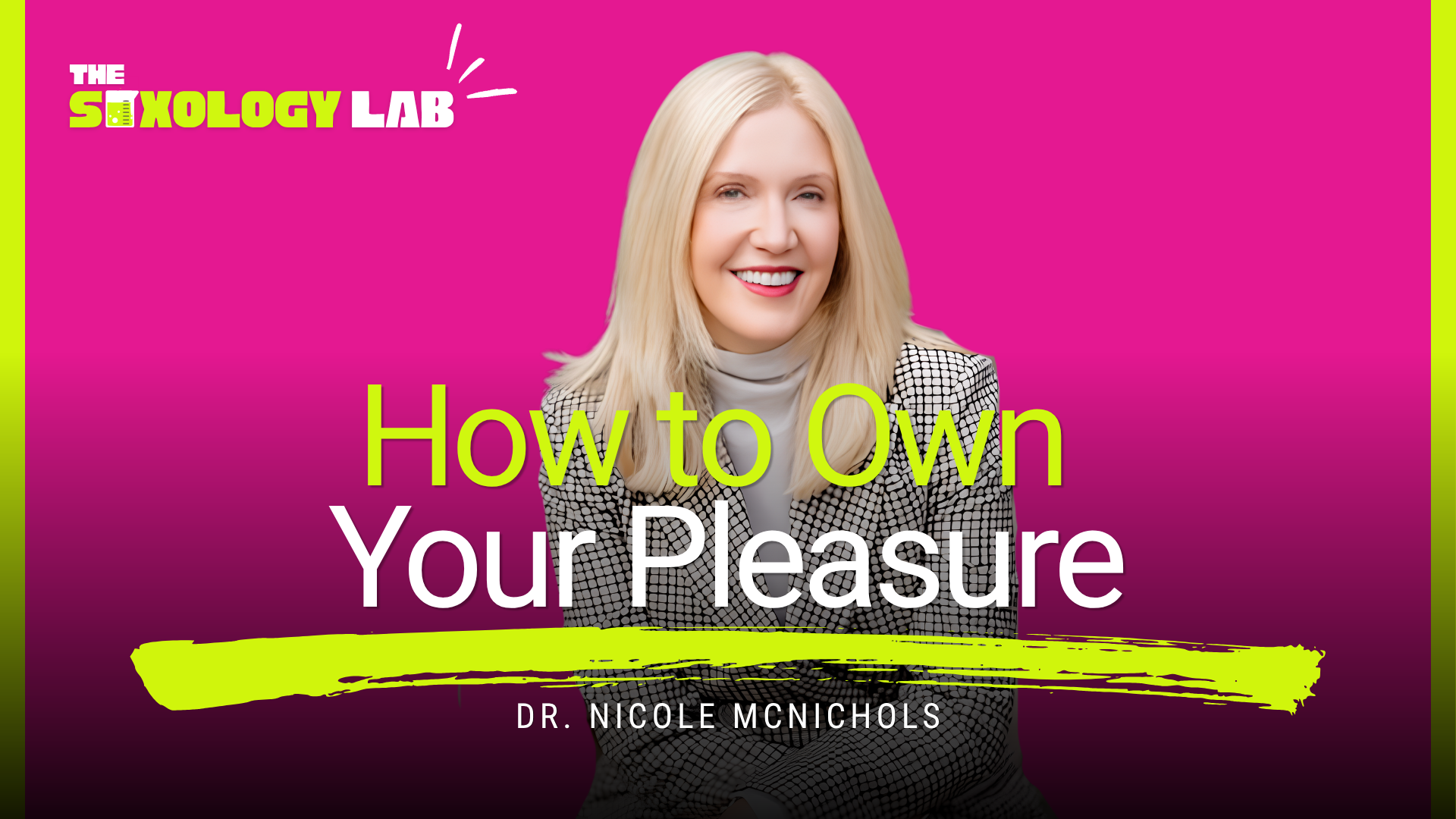
Own Your Pleasure: Dr. Nicole McNichols on Better Intimacy, Better Relationships, and Less Shame | Episode 20
We're surrounded by more conversations about sex than ever before.
Dating apps promise endless possibilities. Social media is filled with relationship advice.
So why are so many people still struggling to have satisfying sex?
According to Dr. Nicole McNichols, the problem isn't a lack of information—it's that we're learning from the wrong places.
What This Episode Explores
"We all could be having better sex. It is within our grasp." — Dr. Nicole McNichols
Despite living in one of the most sexually open eras in history, many young adults enter relationships with little understanding of pleasure, communication, consent, or how healthy intimacy actually develops.
In this episode, Dr. Nicole McNichols shares what teaching more than 4,000 college students every year has taught her about modern sexuality. From Gen Z dating culture and pornography to body image, planning intimacy, and relationship science, she explains why better sex has less to do with technique and far more to do with connection.
The conversation also explores the ideas behind her book, You Could Be Having Better Sex, offering practical, research-backed strategies anyone can use to create more satisfying relationships.
Guest Introduction
"Pleasure overall is a critical component of mental health.” — Dr. Nicole McNichols
Dr. Nicole McNichols is a clinical psychologist, professor, and author of You Could Be Having Better Sex. She teaches one of the largest human sexuality courses in the United States, educating thousands of undergraduate students every year on sexuality, relationships, consent, pleasure, and communication.
Through her teaching, writing, and media appearances, Dr. McNichols translates decades of relationship and sexuality research into practical advice that helps people build healthier, more connected intimate lives.
3 Key Takeaways
Gen Z is navigating relationships with less comprehensive sex education and more unrealistic expectations shaped by pornography and social media.
Better sex begins with understanding your body, communicating openly, and letting go of the pressure to perform.
Prioritizing intimacy strengthens relationships—and research suggests that sexual satisfaction often leads to greater relationship satisfaction.
Who This Episode Is For
Couples wanting a more satisfying sex life
Singles navigating modern dating
College students and young adults
Anyone interested in improving intimacy and communication
In This Episode, We Cover
Why is Gen Z having less sex?
How does pornography shape sexual expectations?
What creates great sex in long-term relationships?
Why should couples schedule intimacy?
What are the different types of intimacy?
How does body image affect sexual satisfaction?
Why is communication more important than technique?
How can people reconnect with pleasure?
Gen Z and Planning Sex Quick Answer Section
Does planning sex make it less romantic?
No. Research suggests that intentionally planning intimacy often increases anticipation, desire, and satisfaction. Rather than making sex feel like a chore, setting aside time for connection allows couples to prioritize intimacy in busy lives.
Why is Gen Z having less sex?
Research shows today's young adults report having less partnered sex than previous generations. Dr. McNichols points to multiple contributing factors, including limited comprehensive sex education, increased social anxiety, the influence of pornography, social media pressures, and changing dating norms.
Expanded Insight
"Real sex is awkward." — Dr. Nicole McNichols
One of the biggest myths about great sex is that it should happen effortlessly.
Movies tell us chemistry should be instant.
Pornography tells us bodies should respond immediately.
Social media tells us everyone else is having incredible sex.
Real life looks very different.
As Dr. McNichols explains, authentic intimacy is often awkward.
People laugh.
They communicate.
They try things that don't work.
They learn.
And that's exactly how better sex develops.
Another fascinating insight from the conversation is the disconnect between what young adults say they want and how they behave.
Many students tell Dr. McNichols they hope for committed, long-term relationships.
At the same time, they often feel trapped in a dating culture built around ambiguity, situationships, and fear of expressing vulnerability.
The result is a generation that frequently hides what they actually want.
The conversation also challenges another common assumption: that improving the relationship automatically improves the sex.
Research suggests the opposite is often true.
When couples intentionally invest in their sexual relationship, overall relationship satisfaction frequently improves as well.
That doesn't mean sex solves every problem.
Perhaps the most surprising recommendation from Dr. McNichols is scheduling intimacy.
For many couples, that idea initially feels unromantic.
Yet anticipation is one of the strongest ingredients of desire.
Planning intimacy creates space to transition out of work mode, reduce stress, reconnect emotionally, and arrive fully present with one another.
Rather than eliminating spontaneity, it creates opportunities for deeper connection.
Throughout the conversation, one message becomes clear:
Great sex isn't about performing.
It's about paying attention.
To yourself.
To your partner.
And to the relationship you're building together.
Listen to the Episode
Listen on Apple Podcasts, Spotify, or YouTube to hear Dr. Nicole McNichols explain why communication, curiosity, and pleasure matter far more than perfection—and how anyone can build a more satisfying sex life.
Related Topics
Want More Conversations Like This?
If you want deeper, research driven conversations about sex, relationships, and culture, join the Sexology Lab newsletter. Get expert insights, real world perspectives, and conversations that challenge outdated thinking and replace it with something more useful.
About The Sexology Lab
The Sexology Lab explores the intersection of sexual health, psychology, and culture. Through expert conversations, we challenge outdated narratives and provide research driven insights into relationships, desire, and human behavior.
