
What if some of the most revealing lessons about human desire came from inside a brothel?
Not from an academic textbook, a relationship study, or a traditional therapy office, but from an environment where people could express parts of themselves they had spent years hiding.
Dr. Laurie Bennett-Cook was attending law school when an unexpected encounter at a motorcycle rally introduced her to the possibility of working in a brothel.
What began as a bucket-list experience fundamentally changed her understanding of sexuality, vulnerability, shame, and human connection.
She encountered people who wanted to be held. People who wanted someone to listen. People who wanted to explore a sexual interest without being judged. People who wanted to feel desirable, accepted, and understood.
The experience challenged her assumptions about sex work, but it also raised a much bigger question about human relationships.
How much of what we call sexual desire is connected to our need to be seen, accepted, and understood?
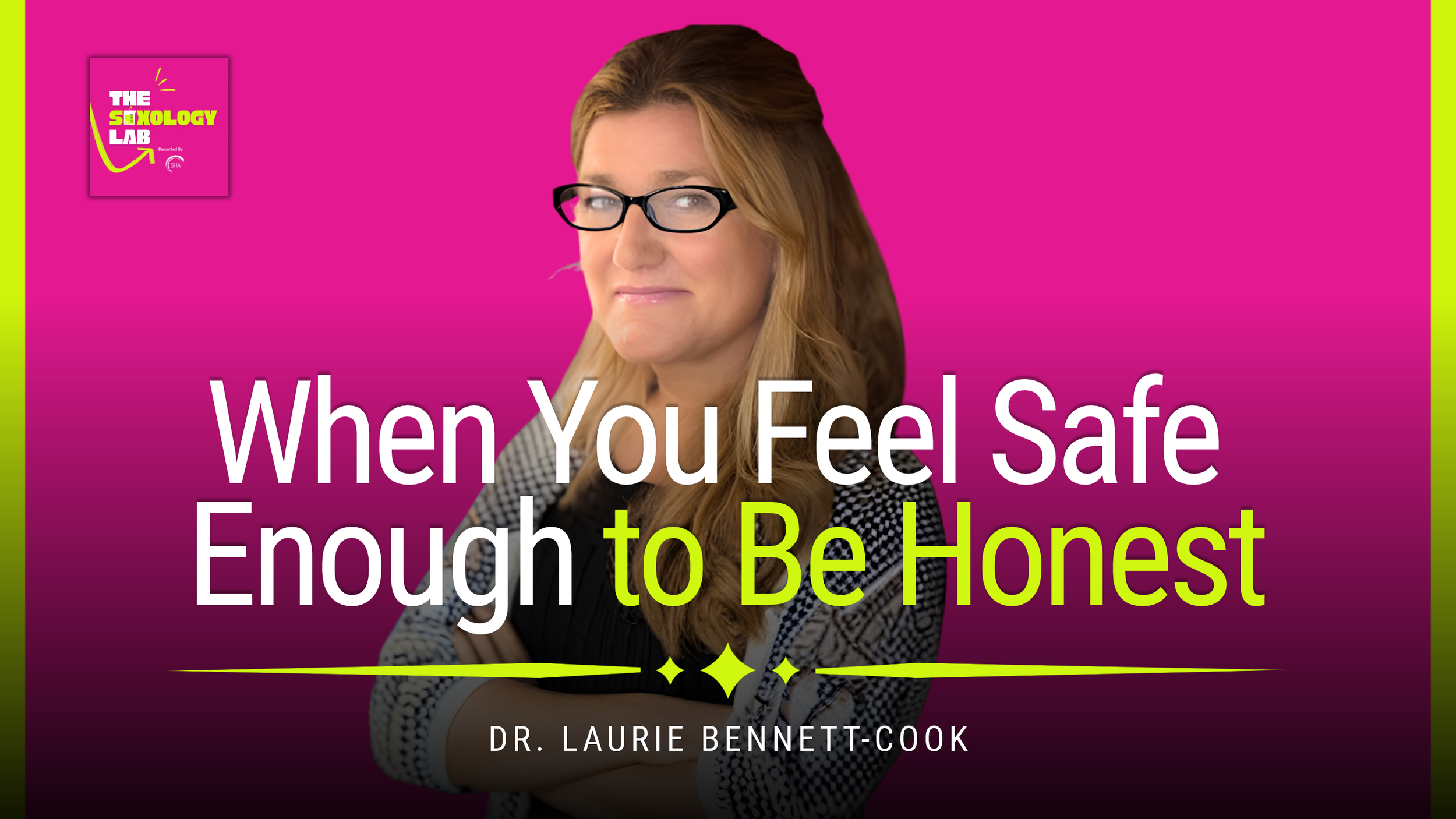
In this episode of The Sexology Lab, host Michelle Melville-Kashon sits down with clinical sexologist Dr. Laurie Bennett-Cook to explore what happens when people finally feel safe enough to express who they are and what they want.
What This Episode Explores
What people are really seeking when they pay for intimacy
How sexual shame prevents people from expressing their desires
The difference between sex, intimacy, and emotional safety
What surrogate partner therapy is and how it works
The differences between sex work and surrogate partner therapy
How media influences perceptions of sexuality and sex work
What 25 years of consensual non-monogamy can teach us about relationships
Why communication, transparency, and autonomy matter more than conventional relationship scripts
Why This Conversation Matters Right Now
We live in a culture that is simultaneously fascinated by sexuality and uncomfortable discussing it honestly.
Dating apps offer unprecedented opportunities to meet people, yet meaningful intimacy can still feel difficult to establish. Social media provides endless information about relationships, but it can also reinforce unrealistic expectations about bodies, attraction, and sexual performance.
Meanwhile, many people struggle to communicate their sexual interests because they fear rejection, embarrassment, or judgment.
The consequences extend beyond the bedroom.
When people believe certain desires make them unacceptable, they may begin hiding important parts of themselves from their partners and even from themselves.
Dr. Bennett-Cook's work invites us to reconsider the assumptions that shape our understanding of healthy sexuality.
Instead of beginning with judgment, what might happen if we began with curiosity?
Instead of assuming we know why someone seeks a particular sexual experience, what if we asked what that experience means to them?
These questions are particularly important for sexual health professionals, whose clients may be navigating experiences and relationship structures that traditional clinical training has not adequately addressed.
Meet Dr. Laurie Bennett-Cook
Dr. Laurie Bennett-Cook is a clinical sexologist, educator, media consultant, and experienced surrogate partner whose professional work includes consensual non-monogamy, kink, sexual exploration, and relationship diversity.
She holds a doctorate in human sexuality and has completed surrogate partner training through the International Professional Surrogates Association (IPSA).
Her approach combines academic education with experiential learning and personal experience.
During her marriage, Laurie worked at the Wild Horse Brothel, where she developed a deeper understanding of the emotional and psychological dimensions of sexual desire.
She and her husband have also been navigating consensual non-monogamy for 25 years.
As an educator, she has presented for Sexual Health Alliance, helping sexual health professionals better understand surrogate partner therapy, professional boundaries, and diverse expressions of sexuality.
Her professional experience also includes consulting on media projects for MGM, Epix, and Netflix.
What makes Laurie's perspective particularly compelling is her ability to examine sexuality from multiple viewpoints: as a clinician, an educator, a former sex worker, a surrogate partner, and someone with decades of personal experience navigating nontraditional relationships.
3 Key Takeaways
Human desire extends beyond sexual gratification. People may seek sexual experiences for companionship, affection, self-discovery, validation, confidence, or the freedom to express themselves without judgment.
Sex and intimacy are not the same thing. Sexual activity can occur without emotional closeness, and meaningful intimacy can exist without sexual activity. Understanding this distinction can help people better identify their relationship needs.
Emotional safety makes honest communication possible. Whether someone is exploring a sexual interest, navigating non-monogamy, or learning to become comfortable with physical affection, feeling safe enough to be vulnerable can make a significant difference.
Who This Episode Is For
Anyone curious about the psychology of human desire
Individuals struggling with sexual shame or communicating their desires
People interested in understanding sex work beyond cultural stereotypes
Sex therapists, sexuality counselors, sex coaches, and sex educators
Mental health professionals interested in surrogate partner therapy
Couples navigating intimacy or considering consensual non-monogamy
Anyone interested in creating relationships that support authenticity, autonomy, and emotional connection
Quick Answer: What Does Human Sexual Desire Really Tell Us?
Human sexual desire is influenced by biological, psychological, emotional, interpersonal, and cultural factors. People may seek sexual experiences for physical pleasure, emotional connection, affection, validation, curiosity, self-expression, or companionship.
Clinical sexologist Dr. Laurie Bennett-Cook explains that her experience working in a brothel revealed how frequently people were seeking acceptance and connection alongside, or instead of, sexual activity.
She also emphasizes that sexual desire and emotional intimacy are distinct experiences. People can experience one without the other.
Understanding the motivations behind desire, reducing sexual shame, and creating emotionally safe environments can help individuals communicate their needs and develop more satisfying relationships.
For sexual health professionals, this means approaching clients' experiences with curiosity rather than assuming that sexual behavior has a single underlying motivation.
What Working in a Brothel Revealed About Human Desire
Why Do People Seek Sex Work?
One of the most persistent stereotypes about sex work is that clients are simply paying for sexual experiences they cannot obtain elsewhere.
Laurie's experience tells a more complicated story.
While some clients sought sexual gratification, others wanted companionship, affection, conversation, or an opportunity to explore something they felt unable to discuss with anyone else.
Some wanted to spend time talking about their lives. Others wanted to cuddle or experience physical closeness without pressure.
What stood out to Laurie was the vulnerability required to enter an environment and express an intimate desire to another person.
“I saw a deeper side to people that I don't think a lot of people always get to.” — Dr. Laurie Bennett-Cook
Her experience highlights an important distinction between the behavior someone engages in and the emotional needs that may accompany it.
Two people may seek the same sexual experience for entirely different reasons.
One might be motivated by pleasure. Another might be seeking novelty, reassurance, acceptance, or companionship.
Research also supports the idea that sexual motivation is complex. In their influential study, Why Humans Have Sex, psychologists Cindy M. Meston and David M. Buss documented hundreds of reported motivations for sexual activity, extending well beyond reproduction and physical pleasure.
Laurie's experiences offer a personal perspective on that broader complexity.
When People Want Permission to Be Themselves
Some of the people Laurie encountered wanted to explore sexual interests they had never felt comfortable expressing.
What might appear relatively ordinary to someone working in sexual health could feel deeply embarrassing to a person who had spent years believing that interest was unacceptable.
For these clients, the opportunity to express a desire without being ridiculed could be meaningful in itself.
This raises an important question for intimate relationships.
How many people are withholding their desires not because they lack self-awareness, but because they are uncertain whether their partners will respond with kindness?
The ability to disclose an interest without being humiliated can be valuable even when a partner does not share that interest.
Acceptance does not require participation.
A person can respect a partner's vulnerability while maintaining their own preferences and boundaries.
Understanding Sex Work Without Oversimplifying It
Laurie is careful to distinguish her experience from the experiences of people who have faced exploitation, coercion, or trafficking.
She describes her time working in an upscale brothel as a voluntary and generally positive experience.
She also recognizes that her circumstances do not represent everyone working in the industry.
This distinction matters.
Consensual adult sex work and human trafficking are not interchangeable concepts. Recognizing the autonomy of adults who choose sex work does not mean overlooking exploitation or the importance of protecting vulnerable people.
The World Health Organization's guidance on HIV, viral hepatitis, and STI prevention for key populations also addresses the importance of reducing stigma and structural barriers that affect sex workers' access to healthcare.
A more informed conversation makes room for different experiences rather than assuming every person's story must follow the same narrative.
What Is the Difference Between Sex and Intimacy?
Perhaps one of the most important distinctions in this episode is between sexual activity and intimacy.
We frequently use these terms interchangeably.
Yet they describe different aspects of human connection.
Sexual activity can involve physical pleasure, attraction, curiosity, or arousal without necessarily involving emotional vulnerability.
Intimacy, on the other hand, can involve trust, affection, emotional closeness, and the experience of being understood by another person.
Intimacy can exist between romantic partners, friends, family members, and other meaningful relationships.
It does not require sexual contact.
Can You Have Sex Without Emotional Intimacy?
Yes. People may enjoy sexual experiences without developing a romantic relationship or a deep emotional connection with a sexual partner.
Laurie points to examples within consensually non-monogamous communities where people distinguish recreational sexual experiences from the emotional intimacy they share with established partners.
This does not mean everyone experiences sex this way.
Some people prefer or require emotional connection before they feel interested in sexual activity. Others experience physical attraction independently of romantic feelings.
Neither experience automatically indicates a more or less healthy relationship with sexuality.
The important considerations are consent, communication, compatibility, and respect for everyone involved.
Why Emotional Safety Matters for Intimacy
Laurie believes emotional safety is fundamental to developing meaningful intimacy.
“I think you need emotional safety in order to have true intimacy.” — Dr. Laurie Bennett-Cook
Emotional safety means being able to express yourself without expecting humiliation, retaliation, or the use of your vulnerabilities against you.
It does not mean a partner must agree with everything you say or participate in every experience you desire.
It means difficult conversations can happen without threatening your dignity.
For many people, the ability to feel emotionally safe is shaped by previous relationships, family experiences, cultural expectations, and trauma.
In another Sexology Lab conversation, Trauma Doesn't Stay Outside the Bedroom with Amanda Jepson, we explore how previous experiences can influence attachment, pleasure, vulnerability, and the nervous system.
Together, these conversations highlight why intimacy requires more than physical attraction.
How Sexual Shame Shapes Human Desire
Many people assume that someone who struggles to communicate their sexual preferences simply does not know what they want.
Laurie suggests that the issue is often different.
People may understand what interests them but have learned that expressing those interests carries social or emotional risks.
That learning can begin long before someone enters a romantic relationship.
A joke on television, a judgmental comment from a friend, a religious teaching, or a negative response from a previous partner can influence whether someone feels comfortable discussing a particular desire.
Even when ridicule is not directed at them personally, people may internalize the message that their preferences are unacceptable.
How Media Influences Sexual Expectations
During the episode, Laurie discusses her experience working as a media consultant.
She emphasizes that entertainment has tremendous potential to educate audiences, sometimes without viewers realizing they are learning.
However, media can also reinforce narrow ideas about sexuality, attractive bodies, acceptable relationships, and sexual performance.
When sexual diversity appears primarily as a joke, a scandal, or a source of embarrassment, viewers may associate their own interests with those negative portrayals.
Laurie highlights the British television series Naked Attraction as an example of entertainment that introduces audiences to a wider range of bodies and sexual preferences.
The larger lesson is that representation matters.
Seeing diverse expressions of sexuality presented without ridicule can create opportunities to question assumptions about what is considered normal.
How to Respond When a Partner Shares a Sexual Desire
A partner's disclosure of a sexual interest can be an opportunity to build trust.
Even when the interest is not something you personally share, you can acknowledge the vulnerability involved in revealing it.
A constructive response might include listening without interrupting, asking respectful questions, expressing appreciation for their honesty, and communicating your own boundaries.
It is possible to be supportive without agreeing to participate.
For many couples, this distinction can make conversations about sexuality feel less threatening.
What Is Surrogate Partner Therapy?
Surrogate partner therapy (SPT) is an experiential approach to addressing certain intimacy, relationship, and sexual concerns through a structured collaboration between three participants:
A client
A qualified therapist
A trained surrogate partner
This arrangement is known as the triadic model.
The therapist and surrogate partner work collaboratively within their respective professional roles to support the client's individualized goals.
According to Laurie, the process can provide opportunities to explore emotional and physical experiences that may be difficult to address through conversation alone.
How Does Surrogate Partner Therapy Work?
Surrogate partner therapy may involve developing communication skills, practicing emotional vulnerability, becoming more comfortable with consensual affection, and exploring boundaries.
The experiences are individualized rather than following a fixed sequence or universal endpoint.
One of the most common misconceptions is that the goal of surrogate partner therapy is necessarily to have sex.
Laurie explains that this is not the case.
Some clients may reach a point where they feel confident enough to pursue independent relationships without wanting sexual contact with the surrogate partner.
The broader goal is to develop skills, confidence, and autonomy that can extend beyond the therapeutic experience.
The Surrogate Partner Collective provides information about the collaborative model, professional education, training, and ethical practice.
Who Might Seek Surrogate Partner Therapy?
Laurie discusses several circumstances that may lead someone to explore surrogate partner therapy, including limited relationship experience, difficulty receiving affection, discomfort with intimacy, disability-related changes, body image concerns, and previous traumatic experiences.
However, these experiences do not automatically make someone a suitable candidate.
Surrogate partner therapy requires individualized assessment, informed consent, appropriate boundaries, and collaboration with qualified professionals.
Its evidence base remains limited compared with more extensively studied psychological treatments, and legal and professional considerations may vary by jurisdiction.
It should not be presented as a universal solution for intimacy concerns or sexual trauma.
Why Experiential Learning Can Matter
During the episode, Laurie describes working with a client who became unexpectedly uncomfortable while experiencing an ordinary moment of physical closeness.
Something as familiar as sharing a blanket felt deeply intimate to someone who had never experienced that kind of affection before.
The example illustrates how differently people can experience the same situation.
Talking about physical affection can help someone understand it intellectually. Experiencing it in an appropriate, structured environment may reveal emotional responses they did not anticipate.
For Laurie, that distinction is central to the value of experiential intimacy work.
Is Surrogate Partner Therapy the Same as Sex Work?
No. While there may be overlapping interpersonal skills and experiences, surrogate partner therapy and sex work have different professional structures and intended outcomes.
Surrogate partner therapy involves defined therapeutic goals, collaboration with a therapist, individualized planning, and a process intended to support the client's independent functioning.
Sex work can encompass a range of consensual adult services and motivations without necessarily involving a formal therapeutic relationship.
Laurie emphasizes that this distinction does not mean sex workers are incapable of providing meaningful emotional support or positive experiences.
It means the professional purpose and framework are different.
Sexual health professionals can learn more through the Surrogate Partner Collective and Sexual Health Alliance's interview with Dr. Laurie Bennett-Cook on surrogate partner therapy.
What 25 Years of Consensual Non-Monogamy Can Teach Us About Relationships
Laurie and her husband have been together for 25 years, navigating a consensually non-monogamous relationship throughout their partnership.
Their experience offers another perspective on the relationship between desire, intimacy, honesty, and personal autonomy.
Is Consensual Non-Monogamy the Same as Cheating?
Consensual non-monogamy (CNM) describes relationship structures in which partners mutually agree that additional romantic or sexual connections may be permitted.
Cheating involves violating relationship agreements or expectations, often through dishonesty or secrecy.
This distinction applies to both monogamous and non-monogamous relationships.
Someone can violate an agreement in a non-monogamous relationship just as they can in a monogamous one.
What matters is not simply the number of partners involved, but whether people are honoring their shared agreements.
Why Communication Is More Than Asking Permission
Laurie describes her relationship as hierarchical because she and her husband share a home, family responsibilities, finances, and a long history together.
When either person makes plans with someone else, they consider how those plans might affect their shared life.
For Laurie, these conversations are not about ownership or requiring permission from another adult.
They are about consideration.
Partners can maintain independent choices while recognizing that their decisions may affect other people.
The Difference Between Caring and Controlling
Laurie explains that she and her husband do not exercise veto power over each other's relationships.
However, they remain willing to express concerns if they notice potentially harmful or disrespectful behavior from another person.
This distinction can be relevant to any relationship structure.
Caring about someone's well-being does not require controlling their decisions.
Similarly, respecting someone's autonomy does not mean remaining silent when you have genuine concerns.
Healthy communication involves navigating the space between those two ideas.
What Research Says About Non-Monogamy
Relationship science has increasingly examined the experiences of people in consensually non-monogamous relationships.
Research published in the Journal of Social and Personal Relationships has explored how people in monogamous and consensually non-monogamous relationships experience relationship quality and functioning.
These conversations challenge the assumption that exclusivity alone guarantees relationship satisfaction.
For a deeper exploration of relationship structures, listen to Monogamy, Polyamory, or Something Else? Dr. Eli Sheff on Relationships, CNM, and Polyamorous Families.
Dr. Sheff brings more than 25 years of research into polyamorous relationships and families to the conversation.
Sexual Health Without Shame
Laurie also emphasizes the importance of proactive sexual healthcare when navigating multiple partnerships.
Open communication about STI testing, prevention strategies, and sexual health expectations can help partners make informed decisions.
Options such as HIV pre-exposure prophylaxis (PrEP) and doxycycline post-exposure prophylaxis (Doxy PEP) may be appropriate for certain individuals, depending on their circumstances and medical eligibility.
The CDC's STI prevention resources and HIV prevention guidance provide evidence-based information for individuals and healthcare professionals.
Medical decisions should be made in consultation with a qualified healthcare provider.
The broader message is that sexual healthcare should be approached through informed decision-making rather than shame or moral judgment.
Expanded Insight: Are We Asking the Wrong Questions About Sexual Desire?
Much of the public conversation about sexuality focuses on what people do.
What are they attracted to?
How often do they have sex?
How many partners do they have?
What relationship structure have they chosen?
But Laurie's experiences suggest that understanding the meaning behind behavior may be equally important.
Someone who seeks physical affection may be experiencing loneliness.
Someone who wants to explore a sexual interest may also want to experience acceptance.
Someone who struggles with intimacy may have limited opportunities to develop emotional or relational skills.
Someone who avoids discussing their desires may be protecting themselves from anticipated rejection.
These possibilities do not mean every sexual desire has a hidden psychological explanation.
Sometimes people simply enjoy a particular experience.
However, assuming that every behavior has the same motivation can prevent us from understanding the individual.
What Sexual Health Professionals Can Learn From This Conversation
For clinicians, educators, and coaches, Laurie's perspective highlights the importance of comprehensive sexuality education and specialized professional knowledge.
A practitioner who understands traditional couples therapy may not necessarily understand consensual non-monogamy, kink, sex work, or surrogate partner therapy.
Competence in one area of sexual health does not automatically translate into competence in every other area.
Laurie emphasizes the importance of recognizing these differences and helping clients connect with professionals who understand their specific experiences.
Sexual Health Alliance's Sex Therapy Certification offers specialized professional education for clinicians interested in expanding their understanding of sexuality, relationships, and diverse expressions of intimacy.
What Would Change if People Felt Safe Expressing Their Desires?
At the end of the episode, Michelle asks Laurie what might change if people felt genuinely safe being honest about their desires.
Laurie's response extends beyond sexuality.
“I think that a lot of people's frustrations come from not being able to fully express and be themselves.” — Dr. Laurie Bennett-Cook
She reflects on how much energy people spend hiding parts of themselves, managing other people's perceptions, and anticipating judgment.
That pressure can influence how people communicate, connect, and respond to differences.
Greater acceptance would not mean abandoning boundaries or expecting everyone to share the same preferences.
It would mean recognizing that people can be different without automatically being wrong.
Perhaps one of the most important lessons from Laurie's work is that understanding human desire requires us to become more comfortable with human diversity.
Frequently Asked Questions About Human Desire and Intimacy
Why do humans seek sexual intimacy?
People seek sexual intimacy for many reasons, including physical pleasure, emotional connection, affection, curiosity, validation, attraction, and self-expression. Motivations vary between individuals and can change throughout life.
Why do people pay for companionship or sexual experiences?
Motivations may include sexual pleasure, companionship, curiosity, affection, privacy, or an opportunity to explore desires without judgment. Dr. Laurie Bennett-Cook's observations reflect her personal experience and should not be generalized to every client or sex worker.
What is the difference between sexual desire and emotional intimacy?
Sexual desire refers to interest in sexual experiences or stimulation. Emotional intimacy involves closeness, trust, vulnerability, and feeling understood. People can experience either without necessarily experiencing the other.
Can sexual shame affect relationships?
Yes. Sexual shame can make people reluctant to communicate preferences, express desires, or discuss concerns. Fear of judgment may create barriers to vulnerability and honest communication between partners.
What is surrogate partner therapy?
Surrogate partner therapy is a structured, experiential approach involving a client, therapist, and trained surrogate partner. Its goals may include developing intimacy skills, communication, confidence, and comfort with consensual physical affection.
Does surrogate partner therapy always involve sex?
No. Sexual activity is not a required outcome of surrogate partner therapy. The process is individualized and may focus on communication, boundaries, emotional connection, body awareness, and relationship skills.
Is surrogate partner therapy legal?
The legal and professional considerations surrounding surrogate partner therapy vary by jurisdiction and practice circumstances. Clinicians and prospective clients should consult qualified local professionals and relevant regulatory guidance before pursuing services.
Is consensual non-monogamy healthy?
Consensual non-monogamy can be a healthy relationship structure for people who genuinely want it and maintain mutually understood agreements. Relationship health depends on factors such as consent, communication, trust, respect, and compatibility rather than relationship structure alone.
How can I become more comfortable discussing my sexual desires?
Start by identifying what you want to communicate and what makes the conversation feel difficult. Choose an appropriate time, discuss your interests without pressuring your partner, and respect each other's boundaries. A qualified sex therapist may also help individuals or couples navigate shame and communication difficulties.
Related Sexology Lab Conversations
Trauma Doesn't Stay Outside the Bedroom | Amanda Jepson | Episode 27
Explore how trauma, emotional safety, attachment, and previous experiences can influence intimacy and sexual pleasure.
Discover what decades of relationship research reveal about consensual non-monogamy, relationship compatibility, and diverse family structures.
Surrogate Partner Therapy Explained with Dr. Laurie Bennett-Cook
Watch Sexual Health Alliance's additional conversation with Laurie about the therapeutic triad, experiential intimacy, professional ethics, and clinical considerations.
Research and Additional Resources
Why Humans Have Sex — Meston and Buss, Archives of Sexual Behavior
Relationship Quality Among Monogamous and Consensually Non-Monogamous Individuals
World Health Organization: HIV, Viral Hepatitis and STI Guidelines for Key Populations
Listen to the Episode
What Working in a Brothel Taught Me About Human Desire | Dr. Laurie Bennett-Cook
What happens when people finally feel safe enough to express what they really want?
In this episode of The Sexology Lab, Michelle Melville-Kashon and Dr. Laurie Bennett-Cook explore the psychology of human desire through the worlds of sex work, surrogate partner therapy, consensual non-monogamy, and clinical sexology.
They challenge conventional ideas about intimacy, unpack the consequences of sexual shame, and explore what meaningful connection can look like when people feel understood rather than judged.
Listen to The Sexology Lab on YouTube, Spotify, Apple Podcasts, or wherever you get your podcasts.
About Our Sponsor: Sexual Health Alliance
Sexual Health Alliance is a global leader in professional sexual health education, offering certifications for sex therapists, sexuality counselors, sex educators, sex coaches, and sexologists.
Since 2015, SHA has connected professionals with leading experts through comprehensive education, immersive training experiences, and a global professional community.
Dr. Laurie Bennett-Cook has educated SHA professionals on surrogate partner therapy, experiential intimacy, and the importance of understanding diverse expressions of sexuality.
Whether you're entering the field or expanding your existing expertise, SHA provides opportunities to develop a more comprehensive understanding of sexual health.
Want More Conversations Like This?
If you want deeper, research driven conversations about sex, relationships, and culture, join the Sexology Lab newsletter. Get expert insights, real world perspectives, and conversations that challenge outdated thinking and replace it with something more useful.
About The Sexology Lab
The Sexology Lab explores the intersection of sexual health, psychology, and culture. Through expert conversations, we challenge outdated narratives and provide research driven insights into relationships, desire, and human behavior.
