
Great sex is supposed to be spontaneous. At least, that's what movies, television, and popular culture have been telling us for decades.
Two people exchange a look, passion takes over, and everything happens effortlessly. Nobody needs to check a calendar, arrange childcare, or think about tomorrow morning's meeting.
But real relationships don't work like movie scenes.
Between demanding careers, children, household responsibilities, stress, and the routines of everyday life, many couples discover that waiting for the perfect spontaneous moment means intimacy keeps getting postponed.
What if planning sex isn't the opposite of romance? What if it actually helps create desire?
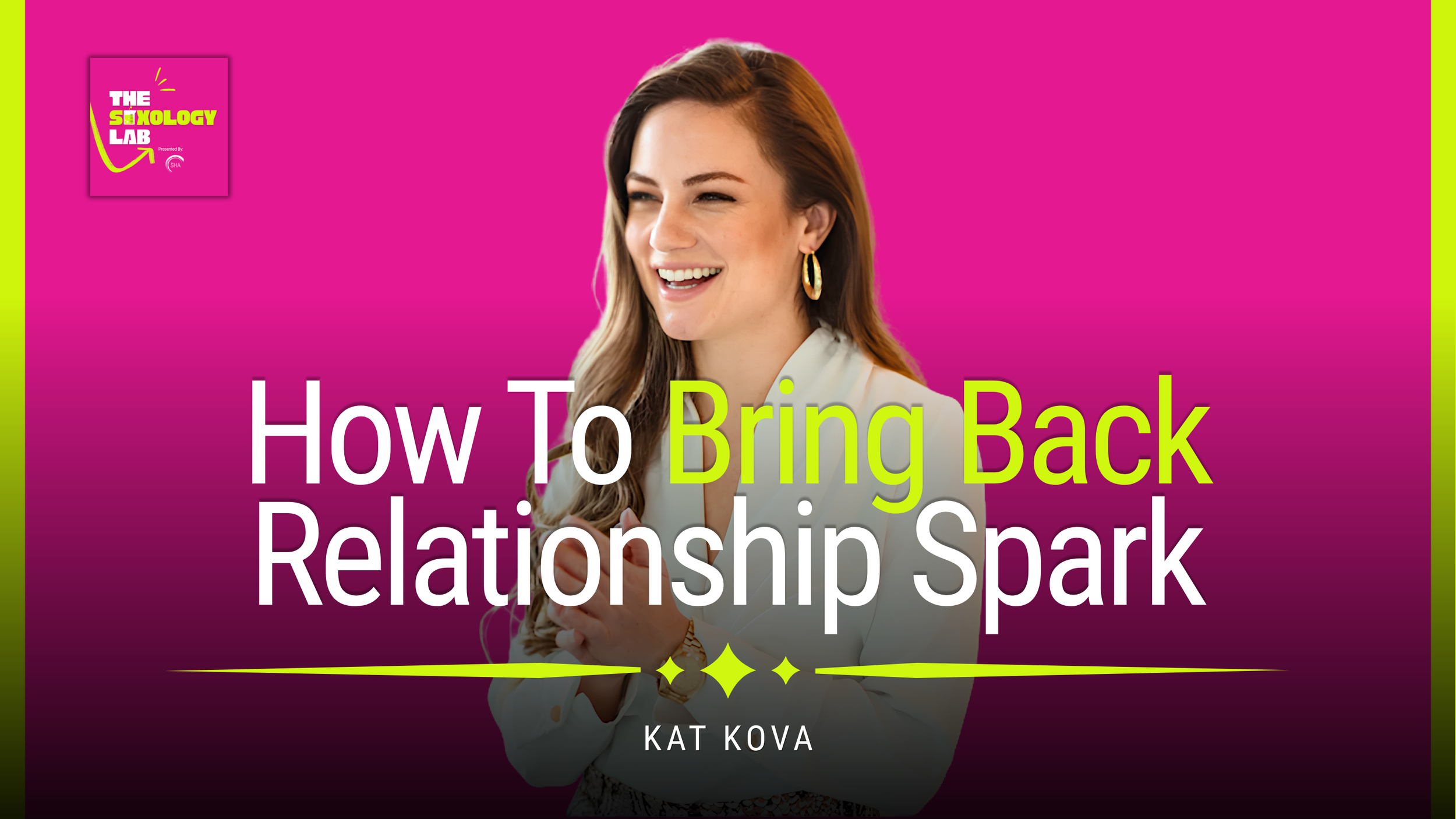
That's the question Kat Kova, PhD, sex and relationship therapist and researcher, has been investigating.
Her research at York University challenges the widely held belief that spontaneous sex is inherently more satisfying than planned sex. Her findings suggest that when people approach scheduled intimacy with positive expectations, planning can help build anticipation, support sexual desire, and create more opportunities for connection.
In Episode 38 of The Sexology Lab, host Michelle Melville-Kashon talks with Kat about the science of planned versus spontaneous sex, why long-term couples sometimes feel more like roommates, and what actually helps people maintain sexual satisfaction over time.
The conversation also explores stress, relationship conflict, orgasm difficulties, body image, and why healthy intimacy requires more than waiting for desire to magically appear.
The surprising lesson? Making time for intimacy doesn't make it less romantic. It means treating your relationship as something worth prioritizing.
Key Takeaways
Planned sex can be just as satisfying as spontaneous sex. Research led by Kat Kova challenges the assumption that intimacy is better when it happens unexpectedly.
Anticipation can help build sexual desire. Planning an intimate experience gives partners something to look forward to, particularly when they approach it positively rather than as an obligation.
Long-term attraction requires intentional effort. Novel experiences, individual interests, flirting, compliments, and meaningful time together can help couples reconnect.
Stress can interfere with sexual desire. Adjusting schedules, managing stressors, and creating opportunities for relaxation may help couples make space for intimacy.
Sexual satisfaction isn't measured by orgasm alone. Communication, pleasure, connection, and body acceptance are important parts of satisfying sexual experiences.
Quick Answer: Does Scheduling Sex Increase Desire?
Yes, planning sex can help increase sexual desire and sexual frequency for some couples, particularly when they view scheduled intimacy positively.
Research by Kat Kova and colleagues at York University found that planned sex can be just as satisfying as spontaneous sex. A later experimental study involving parents of young children found that encouraging more positive beliefs about planned sex was associated with improvements in sexual desire and frequency.
The key is to approach planning as an opportunity for connection rather than a requirement to perform.
Scheduling intimacy doesn't mean partners must have sex at a predetermined time. It means intentionally creating space for affection, pleasure, and connection while respecting each person's preferences and consent.
Research suggests that beliefs about planned sex can influence how people experience it.
Sources: Kovacevic et al., The Journal of Sex Research and York University's research on planned sex and desire.
Meet Kat Kova: Sex Therapist and Relationship Researcher
"There are benefits to planning sex, which include things that are a little surprising like higher desire." - Kat Kova
Kat Kova is a registered psychotherapist, sex and relationship therapist, researcher, and founder of Kat Kova Therapy, a psychotherapy practice based in Toronto, Canada.
Her academic research focuses on romantic relationships, sexual satisfaction, and how couples can maintain meaningful intimacy over time.
Kat earned her PhD in psychology at York University, where her doctoral research investigated beliefs about planned and spontaneous sex and their effects on desire and relationship satisfaction.
Her work has been published in The Journal of Sex Research and Current Opinion in Psychology, and her professional insights have appeared in outlets including Global News, Forbes, and Cosmopolitan.
Kat's interest in sexual health began early.
During the episode, she recalls watching Canada's Sunday Night Sex Show as a child and being fascinated by the relief people experienced when they could openly discuss sexual concerns.
That interest eventually developed into a career combining clinical therapy and academic research.
For Kat, the central question isn't simply what makes relationships last.
It's what makes them satisfying.
She wants to understand how people can maintain attraction, sexual pleasure, emotional connection, and healthy communication throughout long-term relationships.
Learn more about Kat Kova Therapy and explore her published research on planned and spontaneous sex.
Is Spontaneous Sex Really Better Than Planned Sex?
Why We Believe Great Sex Should Happen Naturally
Think about the last romantic movie you watched.
How often did the characters schedule an intimate evening?
Probably not very often.
Popular culture tends to portray satisfying sex as something that happens spontaneously, driven by irresistible attraction and perfect timing.
Planned sex, when it appears at all, is often presented as a joke or a sign that a relationship has become boring.
Kat believes these portrayals influence how people evaluate their own experiences.
If someone assumes that scheduling sex means their relationship has lost its passion, they may resist planning intimacy even when it would help them connect.
That belief can become a problem when partners have demanding schedules.
Instead of intentionally creating opportunities for intimacy, they wait for spontaneous desire.
And sometimes, that moment never arrives.
Kat explains that her research explores how these beliefs shape people's sexual experiences.
The important question isn't whether spontaneous sex is good or bad.
It's whether spontaneous sex deserves its reputation as the only truly romantic option.
What the Research Actually Found
In a study published in The Journal of Sex Research, Kat and her colleagues investigated people's beliefs about spontaneous and planned sex.
The research included two studies: one involving 303 individuals and another examining the daily experiences of 121 couples over 21 days.
Participants generally believed spontaneous sex was more satisfying.
However, the findings did not consistently support the idea that spontaneous sex actually produced greater satisfaction.
Importantly, people's beliefs about planned sex appeared to influence how they evaluated their experiences.
In other words, what people expect from scheduled intimacy may matter as much as whether the experience was planned.
The researchers concluded that the widespread preference for spontaneous sex isn't strongly supported by the actual experiences they studied.
Read the research: Is Spontaneous Sex Ideal? Beliefs and Perceptions of Spontaneous and Planned Sex and Sexual Satisfaction in Romantic Relationships.
New Research Suggests Planning Can Increase Desire
Kat's research didn't stop with examining existing beliefs.
She also investigated whether changing those beliefs could improve sexual experiences.
In a subsequent experimental study involving parents of young children, researchers tested an intervention designed to encourage more positive attitudes toward planned sex.
The study found improvements in sexual desire and frequency among participants encouraged to think more positively about scheduling intimacy.
The findings are particularly relevant for parents, who often experience changes in sleep, stress, available time, and relationship dynamics.
However, these results shouldn't be interpreted as a guarantee that scheduling sex will improve desire for every couple.
The intervention was studied in a specific population, and individual relationships vary.
Still, the findings challenge a familiar assumption.
Desire doesn't always have to come before planning. Sometimes planning helps create the conditions for desire.
Read more: York University: Priming for Planned Sex Increases Desire and Frequency in Parents With Young Children.
How to Schedule Sex Without Making It Feel Like a Chore
Putting sex on the calendar doesn't mean turning intimacy into another household obligation.
In fact, treating scheduled sex as a mandatory task may create the very pressure couples are trying to avoid.
Kat emphasizes the importance of approaching planned intimacy positively.
The purpose is to create opportunities for connection, not enforce a predetermined outcome.
Here are several practical ways couples can apply that idea.
1. Schedule Connection, Not an Obligation
Instead of declaring that sex must happen at a particular time, partners can agree to reserve time for intimacy.
That might involve kissing, cuddling, massage, exploring pleasure, or simply spending uninterrupted time together.
Sex may happen, but it doesn't have to.
This distinction protects autonomy and makes room for changing desires.
2. Build Anticipation Beforehand
Planning creates an opportunity to look forward to intimacy.
Partners might flirt during the day, share affectionate messages, or talk about what they would enjoy doing together.
Kat's research suggests that anticipation can be one of the benefits of planned sex.
Rather than eliminating excitement, preparation may help generate it.
3. Choose a Time That Actually Works
Many couples wait until the end of the day to consider sex.
Unfortunately, that's often when they're most exhausted.
Kat suggests reconsidering the timing.
For some couples, an earlier evening or another time of day may be more practical.
The goal is to find a time when both partners have the energy and emotional availability to connect.
4. Make Room for Flexibility
A scheduled intimate evening should never override consent.
If one partner isn't interested, feels unwell, or needs rest, plans can change.
The purpose of scheduling is to create an opportunity, not an expectation that someone must fulfill.
5. Focus on Enjoyment Instead of Performance
If couples treat planned sex as something they must accomplish successfully, they risk creating additional pressure.
Instead, Kat encourages people to pay attention to pleasure, connection, and the experience itself.
Intimacy can be meaningful without intercourse or orgasm.
Why Do Long-Term Couples Start Feeling Like Roommates?
"My partner is my friend and they're not my enemy here." - Kat Kova
One of the most common concerns Kat hears from couples is that their relationship has started feeling more like a friendship or roommate arrangement.
They still love each other.
They may function well as a team.
But the excitement and sexual attraction they experienced earlier in the relationship seem less accessible.
Kat explains that this transition often happens as relationships become more established.
The early period of intense attraction gives way to greater familiarity, shared responsibilities, and everyday routines.
Couples begin seeing each other through household chores, financial decisions, parenting, illness, and stressful workdays.
These experiences are normal parts of building a life together.
But they can change how partners experience attraction.
Familiarity Isn't the Same as Lost Attraction
When couples live together, they become deeply familiar with each other's routines.
That familiarity can create emotional security.
However, Kat suggests that desire may also benefit from opportunities to see a partner differently.
Trying something new together can reveal qualities that everyday routines don't always highlight.
Partners might discover a new shared interest, take a class, explore an unfamiliar place, or participate in an activity outside their usual routine.
Novel experiences can create opportunities to experience a familiar partner in a different context.
Why Maintaining Individual Interests Matters
Kat also emphasizes the importance of having a life outside the relationship.
Couples who enjoy spending nearly all their time together may gradually lose touch with their individual interests.
That can affect how they experience themselves.
Kat encourages people to consider whether they're maintaining the activities, friendships, and experiences that help them feel engaged and fulfilled.
Individuality doesn't undermine a healthy relationship.
It can help partners continue bringing new energy and experiences into their shared lives.
The Small Habits That Keep Attraction Alive
Reconnecting doesn't always require a major vacation or dramatic romantic gesture.
Kat recommends smaller behaviors that help partners continue seeing each other as desirable.
Flirt.
Offer compliments.
Notice what you find attractive about your partner.
Express appreciation when they do something impressive or thoughtful.
She also introduces the idea of intentionally looking at a partner through the lens of attraction.
In long-term relationships, partners may become so focused on caregiving and companionship that they stop actively noticing what they find desirable.
Sometimes attraction benefits from paying attention to what's already there.
For another conversation about the psychology of desire, explore Why You're Not in the Mood (And There's Nothing Wrong With You) with Dr. Nazanin Moali.
How Does Stress Affect Sexual Desire?
When Michelle asks Kat why couples often feel too stressed for sex, Kat explains the relationship between stress and the nervous system.
Stress activates physiological processes associated with responding to perceived threats.
These responses can affect attention, emotional regulation, and sexual arousal.
Sexual response is complex, and the sympathetic and parasympathetic nervous systems both have roles in different aspects of arousal.
However, ongoing stress and anxiety can make it harder for some people to relax, focus on pleasure, and feel interested in sexual activity.
For couples managing work, parenting, financial responsibilities, and household demands, stress may become a persistent obstacle.
Why Waiting Until Bedtime Doesn't Always Work
Many people assume sex should happen at night.
But if both partners spend the day working, parenting, commuting, and completing household tasks, bedtime may be the least appealing time for intimacy.
Kat suggests examining daily routines instead of assuming a lack of desire means something is wrong with the relationship.
Could partners connect earlier in the evening?
Would another day of the week work better?
Could they reduce certain responsibilities or create more opportunities for rest?
Sometimes the issue isn't attraction.
It's exhaustion.
How to Stay Intimate Without Having Sex
Kat also emphasizes that intimacy doesn't always need to involve sexual activity.
She recommends maintaining small moments of physical and emotional connection.
Examples include sharing a meaningful kiss, cuddling, holding hands, having a conversation without screens, and expressing something vulnerable.
For couples who are comfortable with it, Kat also suggests sleeping naked together as one possible way to encourage physical closeness.
The important principle is that affection doesn't need to lead to sex.
Physical closeness can be valuable on its own.
How to Fight With Your Partner Without Damaging Your Relationship
Another major theme in the episode is conflict.
Kat challenges the idea that healthy couples never fight.
Disagreements are inevitable when two people have different experiences, perspectives, and needs.
The question is how those disagreements are handled.
Why Arguments Can Feel Threatening
During conflict, people may become emotionally and physically activated.
They may focus on particular words, interpret comments defensively, or struggle to consider their partner's perspective.
Kat explains that when someone feels threatened, their attention may shift toward identifying danger rather than understanding what the other person is trying to communicate.
This can turn relatively ordinary disagreements into escalating arguments.
Listen to Understand, Not Just to Respond
Kat encourages partners to remember that they're working toward resolution rather than trying to defeat each other.
In a healthy relationship, both people should have opportunities to express themselves and be heard.
That means explaining your own experience while remaining curious about your partner's perspective.
A disagreement doesn't always mean one person is right and the other is wrong.
Sometimes two people are describing different experiences of the same event.
Kat also emphasizes that couples therapy can help partners develop more productive communication patterns.
A therapist can guide couples toward understanding, repair, and new ways of responding during difficult conversations.
For more on how emotional experiences affect intimacy, listen to Trauma Doesn't Stay Outside the Bedroom with Amanda Jepson.
Why Orgasm Isn't the Only Measure of Sexual Satisfaction
Kat identifies another widespread misconception about sex.
Many people assume that a sexual experience is only successful if someone reaches orgasm.
Some even believe both partners should orgasm simultaneously.
Kat challenges both expectations.
Orgasms can be pleasurable, but they aren't the only meaningful part of sexual experiences.
When people become excessively focused on reaching orgasm, they may overlook other pleasurable sensations, emotional connection, and opportunities for exploration.
When Orgasm Pressure Becomes Harmful
Kat also discusses an emerging area of research involving unwanted or coerced orgasms.
She describes situations in which someone feels pressured to orgasm because their partner expects it.
In these circumstances, orgasm can become less about the person's own pleasure and more about satisfying another person's expectations.
This pressure may undermine trust and emotional safety.
A satisfying sexual relationship requires respect for each person's preferences, boundaries, and autonomy.
Nobody should feel obligated to orgasm to prove that a partner is desirable or skilled.
Why Some People Have Difficulty Reaching Orgasm
Kat explains that orgasm difficulties can have many contributing factors.
When working with clients, she begins by exploring whether the difficulty occurs during masturbation, partnered sexual activity, or both.
That distinction can help identify relevant factors.
Some people may benefit from learning more about sexual anatomy and stimulation.
Others may experience distraction, anxiety, difficulty communicating preferences, or concerns related to previous sexual experiences.
Kat also emphasizes that orgasms vary between individuals.
Not everyone experiences the dramatic, intense orgasms commonly portrayed in entertainment.
And that variation doesn't automatically mean something is wrong.
For people interested in learning more about pleasure, Kat recommends OMGYes, an educational resource exploring sexual stimulation and pleasure techniques.
Persistent or distressing orgasm difficulties may also warrant assessment by a qualified medical or sexual-health professional.
Body Neutrality: A More Realistic Path to Sexual Confidence
"Everybody at every age and every stage deserves pleasure." - Kat Kova
During the episode, Michelle asks Kat how people can become more comfortable with their naked bodies.
Kat's response challenges another popular cultural message.
People are often told they need to love their bodies.
But for someone who has spent years experiencing body shame or dissatisfaction, that expectation can feel unrealistic.
Kat suggests that body neutrality may offer a more accessible starting point.
What Is Body Neutrality?
Body neutrality involves accepting your body without requiring yourself to feel positive about every aspect of its appearance.
Instead of constantly evaluating whether your body looks attractive, you can focus on its experiences, abilities, and needs.
This approach also recognizes that bodies change.
Aging, pregnancy, health conditions, disability, and other life experiences can influence appearance and physical functioning.
Kat encourages people to separate their worth from these changes.
A body doesn't have to meet a particular beauty standard to deserve care, affection, or pleasure.
How to Practice Body Neutrality
Kat recommends beginning with observation rather than judgment.
Notice how your body changes without immediately labeling those changes as good or bad.
Consider the activities your body allows you to experience.
Treat yourself with kindness regardless of your appearance.
For some people, spending time naked in a comfortable, private environment may also help reduce discomfort.
The goal isn't to force confidence.
It's to build a relationship with your body that isn't entirely defined by how it looks.
For more conversations about pleasure, body awareness, and sexual satisfaction, explore The Science of Better Orgasms with Anna Lee.
What Can Sex Therapists Learn From Kat Kova's Research?
Kat's work offers an important lesson for sexual-health professionals.
Beliefs about sex can influence sexual experiences.
A couple may resist scheduling intimacy because they believe it means their relationship is failing.
Someone may feel distressed about orgasm because they believe every sexual encounter should end in climax.
Another person may avoid intimacy because they believe their body must look a particular way to be desirable.
These expectations can become barriers to pleasure.
Kat explains that understanding a client's beliefs may be an important part of treatment.
Rather than introducing a technique without context, clinicians can explore the assumptions that shape how clients interpret their experiences.
Her research on planned sex provides an example of how psychoeducation may help people reconsider unhelpful expectations.
Kat's doctoral work also explored how brief educational interventions could communicate these findings to wider audiences.
For professionals interested in the research, her dissertation, Is Spontaneous Sex Ideal? How (Changing) Beliefs About Planned Sex Influences Sexual Desire, Sexual Frequency and Sexual and Relationship Satisfaction, is available through York University's research repository.
Kat has also presented educational sessions for the Sexual Health Alliance community.
During the episode, she describes the importance of professional collaboration and continuing education, particularly in a field where practitioners often work with complex and sensitive concerns.
Frequently Asked Questions About Scheduling Sex
Is scheduling sex healthy for a relationship?
Scheduling sex can be a healthy way to prioritize intimacy when both partners are interested and comfortable. Research suggests planned sex can be as satisfying as spontaneous sex. The goal should be mutual connection, not obligation.
Can scheduling sex actually increase desire?
Yes, research involving parents of young children found that encouraging positive beliefs about planned sex could increase sexual desire and frequency. Results may vary depending on the relationship and individual circumstances.
Does planning sex make it less romantic?
Not necessarily. Kat Kova's research challenges the assumption that spontaneous sex is inherently more satisfying. Planning can create anticipation and give partners something enjoyable to look forward to.
How often should couples schedule sex?
There is no universal frequency that works for every couple. The appropriate schedule depends on each partner's desires, availability, health, and relationship preferences. Quality, consent, and mutual satisfaction matter more than meeting a predetermined number.
What if one partner doesn't want sex when it's scheduled?
Scheduled intimacy should never create an obligation to have sex. Partners can change plans, enjoy nonsexual affection, or choose another time. Consent and comfort remain essential.
Why do couples lose sexual desire in long-term relationships?
Desire can change because of stress, familiarity, health concerns, relationship dynamics, fatigue, and other factors. Kat recommends maintaining individual interests, trying new activities together, flirting, and creating intentional opportunities for connection.
Can you have satisfying sex without an orgasm?
Yes. Sexual satisfaction can involve pleasure, connection, intimacy, and enjoyable sensations without orgasm. Kat encourages people to avoid treating orgasm as the only measure of a successful experience.
What is the difference between planned sex and spontaneous sex?
Planned sex involves intentionally creating an opportunity for sexual intimacy, while spontaneous sex happens without deliberate advance planning. Research suggests that both can be satisfying, and people's beliefs about each experience may influence how they evaluate it.
Can sex therapy help someone who is single?
Yes. Sex therapy isn't exclusively for couples. Individuals may seek support for orgasm difficulties, body image, sexual concerns, anxiety, communication, or other issues affecting sexual well-being.
Listen to the Episode
Put Sex on Your Calendar: Why Scheduling Can Increase Desire | Kat Kova | Episode 38
What if the secret to better intimacy isn't waiting for the perfect moment, but making time for it?
In this episode of The Sexology Lab, Michelle Melville-Kashon talks with sex therapist and researcher Kat Kova about why scheduled sex can be just as satisfying as spontaneous sex.
They explore how anticipation influences desire, why long-term couples sometimes lose their spark, and how stress, relationship conflict, orgasm expectations, and body image can affect intimacy.
Whether you're in a long-term relationship, exploring your own sexuality, or working professionally in sexual health, this conversation offers research-informed perspectives on creating more satisfying connections.
Listen to The Sexology Lab on your favorite podcast platform.
Related Sexology Lab Conversations
Why You're Not in the Mood (And There's Nothing Wrong With You) | Dr. Nazanin Moali
Explore how mental load, stress, and relationship responsibilities influence sexual desire.
Own Your Pleasure: Dr. Nicole McNichols on Better Intimacy, Better Relationships, and Less Shame
Learn why better sexual experiences often involve communication, connection, and reconsidering cultural expectations.
The Science of Better Orgasms: What 500,000 Data Points Reveal | Anna Lee
Discover what research and physiological data reveal about arousal, pleasure, and sexual response.
Trauma Doesn't Stay Outside the Bedroom | Amanda Jepson
Understand how trauma, emotional safety, and nervous-system responses can affect intimacy.
Research and Additional Resources
Research on Planned and Spontaneous Sex
Kovacevic and colleagues, The Journal of Sex Research. Research examining beliefs about spontaneous and planned sex and their associations with sexual satisfaction.
Kovacevic and colleagues, The Journal of Sex Research. Experimental research examining planned-sex beliefs and sexual outcomes among parents of young children.
Is Spontaneous Sex Ideal? Doctoral Dissertation
Kat Kova's 2026 doctoral dissertation at York University, bringing together her research on sexual beliefs, planned intimacy, and sexual satisfaction.
York University: New Research Casts Doubt on Belief That Spontaneous Sex Is Better
An accessible explanation of Kat's research and why intentional intimacy may benefit relationships.
Guest and Professional Resources
Kat's psychotherapy practice offering sex therapy, couples therapy, and relationship-focused mental-health services.
An educational resource focused on sexual pleasure, anatomy, and stimulation techniques.
Professional education and certification programs for sex therapists, sex coaches, sexuality counselors, sex educators, and sexologists.
About Our Sponsor: Sexual Health Alliance
The Sexology Lab is sponsored by Sexual Health Alliance, a global leader in professional sexual-health education since 2015.
SHA offers certification programs in sex therapy, sex coaching, sexuality counseling, sex education, and sexology.
Through education from leading experts, immersive learning experiences, and a global professional community, SHA helps professionals develop the knowledge, practical skills, and connections needed to advance sexual health.
Kat Kova has presented for the SHA community, sharing her expertise in sexual satisfaction, relationship science, and evidence-informed clinical practice.
Her research demonstrates why continuing education matters for professionals helping individuals and couples navigate sexual desire, intimacy, and relationship challenges.
Interested in pursuing a career in sexual health?
Explore Sexual Health Alliance's certification programs.
Want More Conversations Like This?
If you want deeper, research driven conversations about sex, relationships, and culture, join the Sexology Lab newsletter. Get expert insights, real world perspectives, and conversations that challenge outdated thinking and replace it with something more useful.
Visit SexologyLab.com to explore more episodes and stay connected.
About The Sexology Lab
The Sexology Lab explores the intersection of sexual health, psychology, and culture. Through expert conversations, we challenge outdated narratives and provide research driven insights into relationships, desire, and human behavior.
