
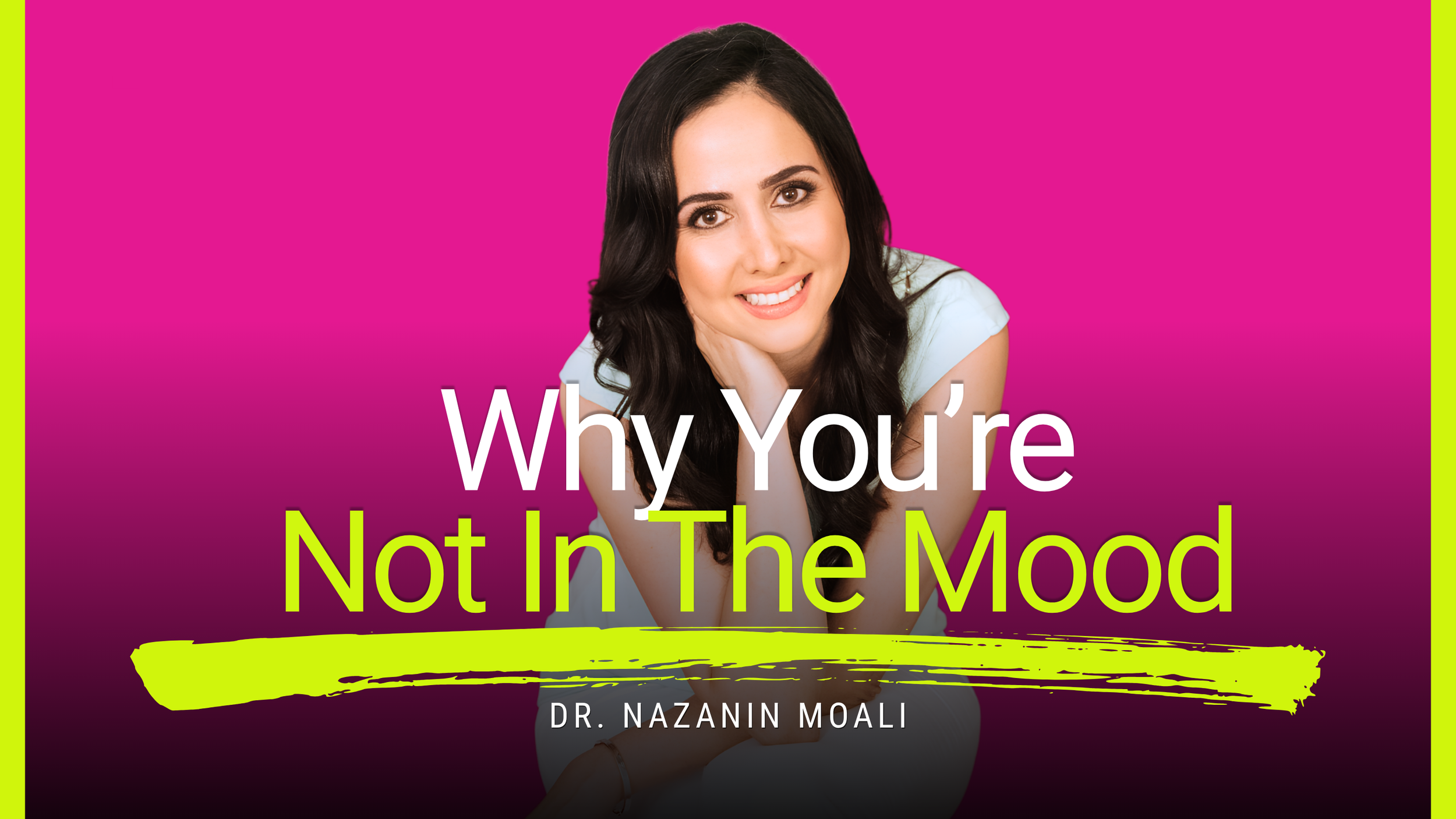
Why You're Not in the Mood (And There's Nothing Wrong With You) | Dr. Nazanin Moali | Episode 26
You're finally alone.
The kids are asleep.
The dishes are done.
Your partner reaches for you.
And instead of feeling desire, you feel...nothing.
Or worse, you feel overwhelmed.
For many people, this isn't a sign that the relationship is failing or that they've "lost their libido."
It's the mental load.
In this episode of The Sexology Lab, psychologist and sex therapist Dr. Nazanin Moali explains why the invisible labor we carry every day quietly drains our desire—and why the solution isn't simply "trying harder" to get in the mood.
What This Episode Explores
"For most people, desire follows arousal—not the other way around." — Dr. Nazanin Moali
Most people believe desire disappears because attraction fades.
Dr. Nazanin Moali argues that the reality is much more complex.
Stress, nervous system dysregulation, emotional safety, unequal household responsibilities, body image, medication, hormones, and everyday life all influence our ability to access desire.
Perhaps most importantly, she explains that most people don't experience spontaneous desire at all.
Instead, they experience responsive desire—meaning desire develops after arousal begins, not before.
Understanding that single concept can completely change how couples approach intimacy.
Guest Introduction
"The mental load keeps us in survival mode, and survival mode isn't where desire thrives." — Dr. Nazanin Moali
Dr. Nazanin Moali is a licensed clinical psychologist, certified sex therapist, consultant, and host of the internationally recognized Sexology Podcast. Through her clinical work, research, teaching, and podcast, she has helped thousands of people better understand desire, relationships, sexual health, and emotional intimacy.
Her work focuses on making evidence-based sex therapy accessible while helping individuals and couples move beyond shame and toward healthier, more connected relationships.
3 Key Takeaways
The mental load doesn't just increase stress—it keeps the nervous system in survival mode, making desire much harder to access.
Most people experience responsive desire rather than spontaneous desire, and that's completely normal.
Better sex often starts outside the bedroom through communication, shared responsibilities, emotional safety, and intentional connection.
Who This Episode Is For
Couples navigating differences in desire
Parents feeling overwhelmed by caregiving responsibilities
Individuals experiencing low libido or stress
Anyone wanting to build a healthier relationship with intimacy
In This Episode, We Cover
What is the mental load?
How does stress affect desire?
What is responsive desire?
Why do people say they're "not in the mood"?
How do chores impact intimacy?
What is an erotic template?
How can couples reconnect after emotional disconnection?
How do you communicate about sex without making it awkward?
Sexual Desire Quick Answer
Can the mental load reduce sexual desire?
Yes. According to Dr. Nazanin Moali, carrying the invisible responsibility of planning, organizing, anticipating needs, and managing a household keeps many people in a chronic state of stress. When the nervous system is focused on survival, it's much more difficult to experience desire, pleasure, and intimacy.
What is responsive desire?
Responsive desire means you don't necessarily feel sexually interested before intimacy begins. Instead, desire develops after you begin connecting physically or emotionally with your partner. Research and clinical experience suggest this is how many people, especially those in long-term relationships, experience desire.
Expanded Insight
"Great sex often starts long before anyone takes their clothes off." — Dr. Nazanin Moali
One of the biggest misconceptions about desire is that it should appear automatically.
Hollywood tells us that passionate couples lock eyes across the room and immediately want each other.
Real life looks very different.
Dr. Moali explains that for most people, desire isn't spontaneous.
It's responsive.
That means you may begin an intimate moment feeling completely neutral.
As touch, connection, flirting, kissing, and emotional closeness build, desire gradually follows.
Understanding this alone helps countless people stop believing they're broken simply because they aren't constantly "in the mood."
But the conversation goes much deeper than desire styles.
One of the most powerful sections of the episode focuses on something many couples never talk about:
Mental load isn't simply doing chores.
It's remembering every birthday.
Scheduling doctor appointments.
Knowing when soccer practice starts.
Ordering groceries before they run out.
Planning vacations.
Remembering permission slips.
Keeping track of what everyone else needs before they even ask.
Because this work is invisible, it's often overlooked.
Yet psychologically, it carries an enormous cost.
As Dr. Moali explains, mental load places the nervous system in a continual state of activation.
Instead of feeling relaxed, playful, and curious—the emotional state most associated with desire—we stay focused on responsibilities, deadlines, and unfinished tasks.
The body remains in survival mode.
And survival mode is not particularly sexy.
This dynamic also changes how partners experience one another.
When one partner constantly reminds the other about chores, appointments, and responsibilities, the relationship slowly shifts from lovers to manager and employee—or worse, parent and child.
Neither role creates much erotic energy.
Rather than assigning blame, Dr. Moali encourages couples to become curious about these patterns.
Open conversations about expectations, clearer systems for managing responsibilities, and intentionally sharing the invisible labor can dramatically improve emotional connection.
The episode also explores another overlooked aspect of intimacy:
Communication before problems arise.
Instead of waiting until frustration builds, Dr. Moali encourages couples to schedule regular conversations about their sex life through what she calls a "Sexy Happy Hour."
These aren't conversations about fixing what's broken.
They're opportunities to celebrate what's working, explore fantasies, discuss new ideas, and stay emotionally connected before resentment develops.
Ultimately, this conversation reminds us that great sex doesn't begin in the bedroom.
It begins with feeling safe.
Feeling supported.
Feeling present.
And creating a life where your nervous system actually has room for pleasure.
Listen to the Episode
Listen on Apple Podcasts, Spotify, or YouTube to hear Dr. Nazanin Moali explain responsive desire, the hidden impact of mental load, emotional safety, and practical ways couples can reconnect both inside and outside the bedroom.
Related Topics
Want More Conversations Like This?
If you want deeper, research driven conversations about sex, relationships, and culture, join the Sexology Lab newsletter. Get expert insights, real world perspectives, and conversations that challenge outdated thinking and replace it with something more useful.
About The Sexology Lab
The Sexology Lab explores the intersection of sexual health, psychology, and culture. Through expert conversations, we challenge outdated narratives and provide research driven insights into relationships, desire, and human behavior.
