
What if everything we've been told about sex and aging is missing the most important part of the story?
We hear plenty about what happens to our bodies as we get older. Hormones change. Sexual desire may shift. Menopause brings new physical experiences, and intimacy may look different than it did at 30.
But there's a question we rarely ask:
What if sexual pleasure doesn't have an expiration date?
According to decades of research, sexuality remains an important part of life for many older adults. And some people report that their sexual experiences actually improve with age.
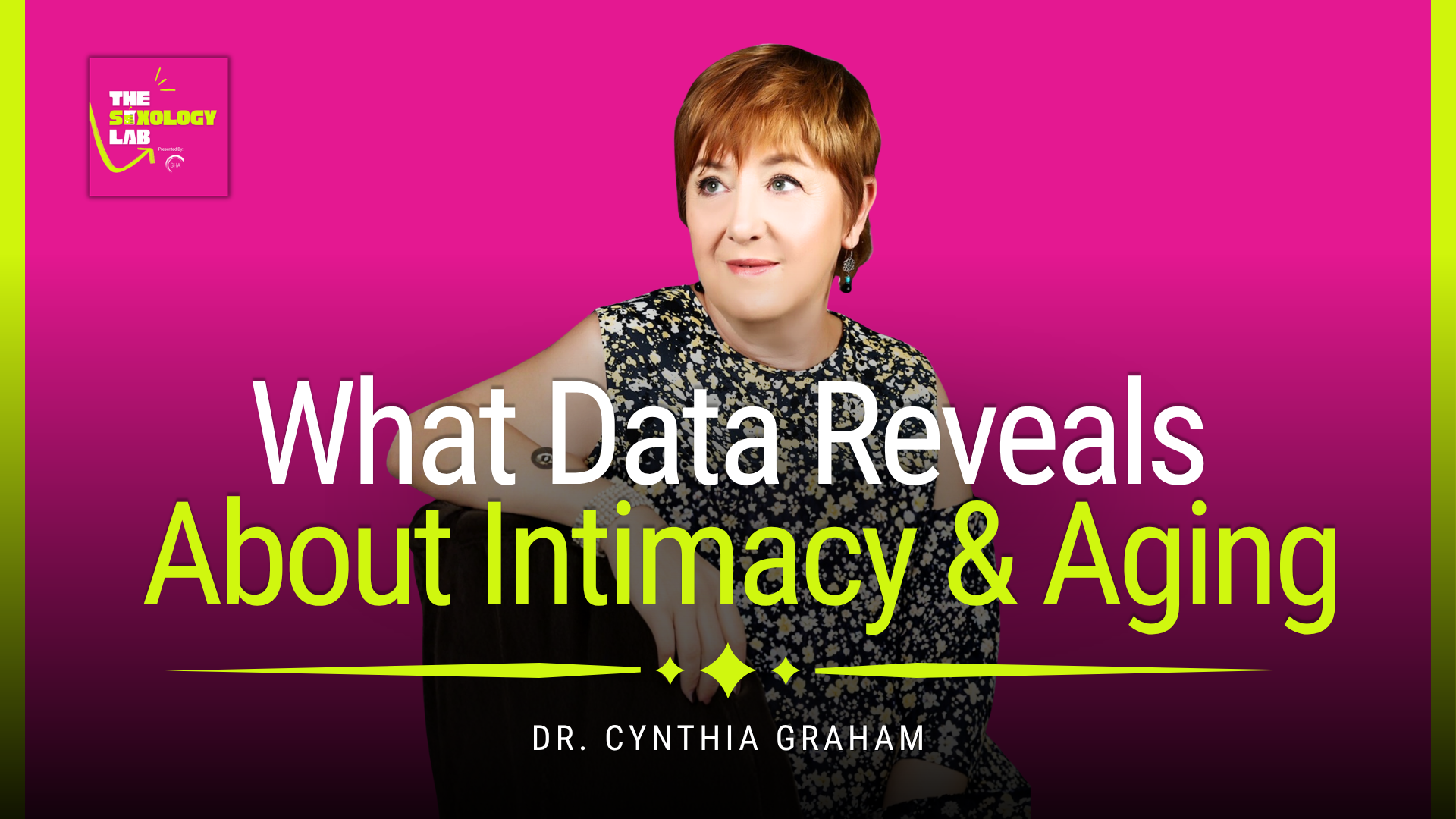
Dr. Cynthia Graham has spent her career investigating questions that medicine, psychology, and society have often overlooked. As a clinical psychologist, Senior Scientist at the Kinsey Institute, and Editor-in-Chief of The Journal of Sex Research, she's helping challenge assumptions about women's sexuality, menopause, masturbation, and sexual well-being later in life.
In this episode of The Sexology Lab, Cynthia joins host Michelle Melville-Kashon to explore groundbreaking research on sex after 60, why masturbation may help some women manage menopause symptoms, and what clinicians and couples need to understand about sexual pleasure as we age.
And perhaps most importantly, she explains why the future of sexual-health research needs to focus on more than what's going wrong.
It needs to explore what's still going right.
What This Episode Explores
"For most older adults, sexuality is still an important component of their lives." - Dr. Cynthia Graham
Sexuality doesn't simply disappear as people age. Yet older adults remain significantly underrepresented in sexual-health research, clinical conversations, and public discussions about pleasure.
Dr. Graham's research offers a more nuanced picture.
Through international studies of older adults, nationally representative surveys, and recent research conducted with Dr. Justin Lehmiller, she's investigating how sexual pleasure changes across the lifespan and how people adapt to those changes.
The conversation explores several important questions:
Does sexual pleasure actually decline after menopause?
Can orgasms become better with age?
Can masturbation help with menopause symptoms such as sleep problems and mood changes?
Why do some older women use sex toys during masturbation but not partnered sex?
How can couples maintain satisfying sexual relationships after 60?
What should doctors and therapists be asking older patients about sexuality?
Why is so much sexual-health research focused on dysfunction instead of pleasure?
The answers challenge the idea that aging and sexual decline are inevitably the same thing.
Meet Dr. Cynthia Graham
"It's not all doom and gloom." - Dr. Cynthia Graham
Dr. Cynthia Graham is an internationally recognized sexual-health researcher, clinical psychologist, Senior Scientist at the Kinsey Institute, and Editor-in-Chief of The Journal of Sex Research.
She has authored more than 200 peer-reviewed publications and has spent decades investigating women's sexuality, sexual desire, contraception, sexual functioning, and sexual well-being across the lifespan.
Her interest in sexual-health research began during her doctoral studies at McGill University.
While studying the effects of hormonal contraception, Cynthia discovered that some women experienced decreased sexual desire and enjoyment after starting the pill. She also encountered significant gaps in the existing research and clinical understanding of those experiences.
That discovery helped shape the direction of her career.
More recently, Cynthia has been involved in a six-country European research project examining sexuality in older adulthood. The project included interviews and surveys exploring how older adults experience intimacy, adapt to physical changes, and define sexual well-being.
She has also collaborated with Dr. Justin Lehmiller on research investigating masturbation, sex toy use, and menopause-related symptoms.
Her work challenges the tendency to view aging primarily through sexual dysfunction and instead asks how people can continue experiencing pleasure, intimacy, and satisfaction throughout their lives.
3 Key Takeaways
"Definitely not true that everything gets worse with menopause." - Dr. Cynthia Graham
1. Sexual Pleasure Doesn't Necessarily Decline With Age
One of the most surprising findings from Cynthia's research is that many older women report little or no change in orgasm quality as they age.
Some even report improvement.
While the frequency of masturbation or partnered sex may decrease, the quality of sexual experiences doesn't necessarily follow the same trajectory.
Older adults may also place greater emphasis on intimacy, non-penetrative pleasure, communication, and exploration.
Aging can change how people experience sexuality without eliminating their capacity for pleasure.
2. Masturbation May Help Some Women Manage Menopause Symptoms
Research conducted by Cynthia Graham and Dr. Justin Lehmiller suggests that masturbation may be associated with relief from certain menopause-related symptoms.
Sleep difficulties and mood changes emerged as particularly interesting areas of investigation.
However, the research is still developing. Researchers have not established that masturbation directly causes symptom improvement, nor have they determined whether orgasm itself is responsible for any benefits.
These findings offer promising directions for future research rather than a replacement for established medical care.
3. Sexual Communication Matters at Every Age
Cynthia discusses research finding that difficulty communicating sexual likes and dislikes was strongly associated with low sexual interest among women.
That finding wasn't limited to older adults.
It appeared across age groups.
Whether someone is 25 or 75, being able to discuss what feels good, what has changed, and what they want from intimacy can make an important difference.
Sexual satisfaction isn't only about physical function.
It's also about communication, adaptability, and feeling comfortable discussing pleasure.
Who This Episode Is For
This conversation is particularly valuable for:
Women experiencing perimenopause or menopause.
Adults over 60 interested in maintaining or improving their sexual well-being.
Couples navigating changes in sexual desire or intimacy.
People curious about masturbation, orgasm, and sex toys later in life.
Sex therapists, sexuality counselors, and sex coaches.
Gynecologists, primary care providers, and other medical professionals.
Researchers studying aging, sexuality, and women's health.
Anyone who has been told that sexual pleasure inevitably disappears with age.
In This Episode, We Cover
Why older adults have historically been excluded from sexual-health conversations.
What six-country research reveals about sexual aging.
Why sexual frequency and sexual satisfaction aren't the same thing.
Changes in orgasm quality after menopause.
Research on masturbation and menopause symptoms.
The relationship between self-pleasure, sleep, and mood.
How sex toys can support sexual exploration.
Why masturbation remains stigmatized, even in relationships.
How clinicians can discuss sexuality with older patients.
Why sexual-health education remains limited in medical and psychology training.
The importance of cultural sensitivity in sex therapy.
Planned versus spontaneous sex.
How sexual desire and arousal interact.
Why communication about sexual preferences matters.
Emerging directions in sexuality research.
Quick Answer: Does Sexual Pleasure Decline After 60?
No. Sexual pleasure does not inevitably decline after age 60. Although aging and menopause can affect sexual function, desire, comfort, and frequency, research shows that many older adults continue to value sexuality and experience satisfying sexual relationships.
Studies discussed by Dr. Cynthia Graham found that most older women surveyed reported no decline in orgasm quality, while some reported improvement. Research involving older adults also suggests that intimacy, non-penetrative sexual activities, communication, and adapting to physical changes can support sexual satisfaction later in life.
Menopause may introduce challenges such as vaginal dryness, discomfort, or changes in desire, but these experiences vary considerably and many are treatable.
The key distinction is that changes in sexual function do not automatically mean the end of sexual pleasure.
What Does the Research Actually Say About Sex After 60?
Sexuality Remains Important Throughout Older Adulthood
One of the biggest misconceptions about aging is that older adults gradually lose interest in sexuality.
Cynthia's research tells a different story.
Through a major European research project involving six countries, researchers examined sexual well-being among older adults, including people in their seventies and eighties.
The findings highlighted something that is frequently missing from public conversations about aging.
Many older adults continue to consider sexuality an important part of their lives.
That includes people who are not currently in romantic relationships.
Sexuality doesn't require a partner, and sexual well-being encompasses much more than intercourse.
It can include self-pleasure, affection, physical intimacy, fantasy, emotional connection, and personal identity.
This broader understanding is essential because discussions of sexuality in older adulthood have historically focused on sexual problems rather than the experiences people continue to enjoy.
The National Institute on Aging also recognizes that intimacy and sexuality can remain important throughout later life, even as bodies and relationships change.
Can Sex Actually Get Better With Age?
For some people, yes.
Cynthia describes interviews in which older adults acknowledged having sex less frequently than they once did but reported that the quality of their experiences had remained stable or improved.
Some participants placed greater importance on emotional intimacy.
Others explored new forms of touch or non-penetrative sexual activity.
Some described becoming more comfortable with their changing bodies.
These findings challenge the assumption that more frequent sex automatically means better sex.
Sexual satisfaction is subjective.
For one couple, satisfying intimacy might involve regular intercourse.
For another, it might mean affectionate touch, oral sex, mutual masturbation, or a combination of experiences.
And for someone without a partner, satisfying sexuality may involve solo pleasure.
There is no single formula for successful sexual aging.
Cynthia and her collaborators have even developed a measure of successful sexual aging to better understand what sexual well-being means to older adults themselves.
The important shift is moving away from judging sexuality against a younger version of the body and toward understanding what pleasure and connection mean in the present.
What Happens to Orgasm Quality After Menopause?
One of the most interesting findings from Cynthia's research concerns orgasm quality.
Researchers asked older women whether their orgasms had changed as they aged.
The majority reported no change.
A smaller group reported that orgasm quality had worsened.
But another group reported improvement.
That last finding is particularly important.
It challenges the expectation that orgasm inevitably becomes weaker or less satisfying with age.
Cynthia also notes that masturbation frequency may decrease over time, but that decrease does not necessarily correspond to a decline in orgasm quality.
In other words, someone might masturbate less frequently while continuing to experience orgasms that feel just as satisfying as they did years earlier.
These results also demonstrate why sexual-health researchers need to ask about pleasure directly.
If studies only measure frequency, pain, or dysfunction, they may miss important aspects of people's experiences.
Can Masturbation Help With Menopause Symptoms?
The Research Behind Self-Pleasure and Menopause
Menopause research has traditionally emphasized medical interventions.
Hormone therapy, medications, and treatments for vaginal dryness or other symptoms are important areas of care.
But Cynthia and Dr. Justin Lehmiller wanted to investigate something that had received far less attention.
Could masturbation and self-pleasure be associated with relief from menopause symptoms?
Their first project involved surveying women about their experiences of menopause, masturbation, sex toy use, and symptom changes.
Some participants reported improvements in symptoms associated with masturbation.
Sleep difficulties and mood changes were among the areas that stood out.
Cynthia discusses a finding that nearly one in five women reported some menopause-related symptom relief from masturbation.
That doesn't mean masturbation works for everyone.
It also doesn't establish that masturbation caused the improvements.
However, it suggests that self-pleasure deserves more serious scientific investigation.
For another perspective on this research, listen to The Menopause Study That Had Women Self-Pleasuring 3–4 Times a Week | Dr. Justin Lehmiller | Episode 31, available through The Sexology Lab episode library.
Can Masturbation Improve Sleep During Menopause?
Sleep was one of the most compelling areas of Cynthia's research.
Many people experience sleep disturbances during the menopause transition, including difficulty falling asleep or staying asleep.
In the survey research, some women reported that masturbation helped with sleep-related symptoms.
Cynthia and her colleagues are particularly interested in understanding why.
Could orgasm play a role?
Could the relaxation associated with self-pleasure be important?
Could the benefits occur even without orgasm?
These questions remain open.
The research team has also conducted a prospective study involving more than 50 women over approximately three months, examining experiences across different masturbation conditions.
Cynthia explains that the team is analyzing those data and hopes to pursue additional research.
The findings are promising, but masturbation should not be presented as a proven treatment for insomnia or menopause-related sleep problems.
Anyone experiencing persistent sleep difficulties should discuss them with a qualified healthcare professional.
Is Orgasm Necessary to Experience Benefits?
Not necessarily, but the research hasn't yet established the answer.
Cynthia explains that one of the questions researchers are investigating is whether the potential benefits of masturbation are specifically associated with orgasm or whether self-pleasure itself may contribute.
This distinction matters.
People experience pleasure in many ways, and not every sexual experience includes orgasm.
If future research identifies benefits from self-pleasure without orgasm, that could broaden our understanding of how sexuality relates to well-being.
For now, the responsible conclusion is that researchers are exploring an interesting association, not prescribing a particular number of orgasms or masturbation sessions.
Why Sex Toys May Be Especially Relevant After 60
Sex Toys and Orgasm in Older Women
Cynthia's research found that masturbation with a sex toy was more likely to produce orgasm than partnered sexual activity among the women studied.
That finding is important because it challenges the assumption that partnered intercourse should be the primary measure of sexual satisfaction.
For many people, direct clitoral stimulation is an important part of experiencing orgasm.
Sex toys can provide forms of stimulation that may be difficult to reproduce through other activities.
They can also support experimentation with different sensations and preferences.
Cynthia notes that sex toy use is becoming more common across age groups, although stigma remains.
She also discusses how manufacturers have begun developing products with older adults and people with mobility limitations in mind.
Features such as comfortable grips, easier controls, and accessible designs may help some people continue exploring pleasure as their physical needs change.
Why Are Some Women Comfortable Using Toys Alone but Not With Partners?
Cynthia describes research suggesting that some women assume their partners would disapprove of masturbation.
Interestingly, a study involving couples found that male partners were often more accepting than the women expected.
This highlights a common relationship problem.
Sometimes people make assumptions about what their partners believe without actually discussing the subject.
A woman may avoid mentioning masturbation because she worries her partner will feel rejected.
A partner may assume that sex toys indicate dissatisfaction with their sexual relationship.
Neither assumption is necessarily accurate.
Open communication can help couples explore what different sexual activities mean to each person.
Sex toys do not have to replace partnered intimacy.
For some couples, they can become another way to experience it.
Why Masturbation Is Still Taboo
Despite greater public discussion of sexual wellness, masturbation remains surrounded by cultural and personal stigma.
Cynthia has encountered these attitudes throughout her research and clinical career.
Some women believe masturbation is inappropriate when they have a partner.
Others have never received information about self-pleasure.
Some have religious or cultural beliefs that discourage masturbation.
Cynthia emphasizes that clinicians should not assume every patient wants to explore self-pleasure.
Sexual-health care should be informed by research while remaining respectful of individual values.
The goal is not to convince everyone to masturbate.
It's to make accurate information available and allow people to make informed choices about their own sexuality.
How Can Couples Maintain a Satisfying Sex Life After 60?
Planned Sex Can Be Just as Satisfying as Spontaneous Sex
One of the most useful parts of Cynthia's conversation challenges another familiar myth.
Good sex is supposed to happen spontaneously.
Many people assume that planning intimacy makes it less romantic or exciting.
But Cynthia points to research suggesting that planned sex can be just as satisfying as spontaneous sex.
For some couples, anticipation can even enhance arousal.
Planning an intimate evening, sending affectionate messages, or creating time without interruptions can build excitement.
This can be particularly helpful when partners have different schedules, health considerations, or levels of desire.
Planning doesn't mean an obligation to have sex.
It means creating an opportunity for connection while preserving each person's freedom to decide what feels right.
Desire Doesn't Always Come Before Arousal
Many people imagine sexual desire as a predictable sequence.
First, you feel desire.
Then, you become aroused.
Then, you engage in sexual activity.
But research suggests that desire and arousal don't always happen in that order.
Sometimes desire emerges in response to pleasurable stimulation, emotional connection, or an intimate situation.
This is often discussed as responsive desire.
It can help explain why someone might not feel spontaneously interested in sex but may become interested after affectionate interaction or other welcome stimulation.
Importantly, responsive desire should never be used to pressure someone into unwanted sexual activity.
The distinction is between being open to a consensual experience and feeling obligated to participate.
Understanding how desire works can help couples move away from unrealistic expectations and toward more flexible approaches to intimacy.
For more on changing desire, explore our conversation with Dr. Nazanin Moali about why you're not in the mood.
Sexual Frequency Isn't a Relationship Scorecard
Cynthia shares a memorable example from her clinical work.
A couple had maintained daily sexual activity for years.
When their frequency began to change, both partners became worried.
One feared that attraction was disappearing.
The other interpreted the change as the beginning of an inevitable decline.
But their relationship was otherwise strong.
The problem wasn't necessarily a lack of intimacy.
It was the meaning they attached to changing frequency.
Cynthia helped them recognize that sexual patterns naturally evolve.
A relationship doesn't become less meaningful simply because partners stop having sex every day.
What matters is whether the people involved feel connected, respected, and satisfied with their relationship.
Communication May Matter More Than Couples Realize
Cynthia discusses findings from a large nationally representative British survey examining women's sexual interest.
One of the strongest predictors of low sexual interest was difficulty communicating sexual likes and dislikes.
This association appeared across age groups.
That finding reinforces an important point.
People cannot always expect their partners to know what they want without being told.
Sexual preferences change.
Physical comfort changes.
Relationships change.
And what once felt pleasurable may eventually feel different.
Couples who can discuss these changes have more opportunities to adapt.
Those conversations might include:
What feels good now?
Is there anything you'd like to try differently?
Are there activities that have become uncomfortable?
What helps you feel connected?
How can we make intimacy more enjoyable for both of us?
These questions don't require a crisis.
They can be part of an ongoing conversation about pleasure and connection.
For another discussion of sexual communication, explore Dr. Tara's episode on asking for what you want sexually.
Why Doctors Need to Ask Older Patients About Sexual Health
The Problem With Assuming Older Adults Are Asexual
Cynthia believes one of the biggest barriers to better sexual-health care is the assumption that older patients aren't interested in sex.
Healthcare providers may avoid the subject because they worry it will be awkward or inappropriate.
They may assume that someone who is single isn't sexually active.
They may also assume that a patient in their seventies or eighties wouldn't want to discuss masturbation or sex toys.
These assumptions can prevent patients from receiving information and care.
Sexual concerns may involve physical discomfort, medications, relationship changes, emotional well-being, or questions about pleasure.
Ignoring sexuality means potentially overlooking an important part of a person's health.
How Clinicians Can Start the Conversation
Cynthia recommends beginning with broad, open-ended questions.
Rather than immediately asking about masturbation or specific sexual behaviors, clinicians can invite patients to discuss sexuality in a way that feels comfortable.
For example:
"Have you noticed any changes in your sexuality or intimacy that you'd like to talk about?"
Or:
"Is there anything about your sexual well-being that you'd like us to discuss?"
These questions allow patients to decide what information they want to share.
Cynthia also emphasizes the importance of avoiding assumptions about relationship status, gender of partners, or sexual activity.
A clinician doesn't need to have every answer immediately.
Sometimes the most important first step is simply making it clear that sexual health is an appropriate subject for discussion.
Sexual Health Is Still Missing From Professional Training
Cynthia reflects on how little sexual-health education she received during her own psychology training.
She also describes encountering medical students who didn't believe discussing sexual behavior or attraction was relevant to contraceptive counseling.
These gaps have consequences.
Patients may not receive information about medication-related sexual side effects.
Clinicians may feel unprepared to address sexual concerns.
And older adults may never be asked about an important aspect of their well-being.
Specialized professional education can help close that gap.
Sexual Health Alliance, the sponsor of The Sexology Lab, provides advanced education and certification programs for sex therapists, sexuality counselors, sex educators, sex coaches, and sexologists.
Cynthia has previously presented educational programming for SHA and describes the experience as highly engaging, well organized, and professionally rewarding.
She also discusses recommending SHA's educational opportunities to students interested in pursuing careers in sexual health.
What's Next for Sexual-Health Research?
Moving Beyond Dysfunction to Pleasure
As Editor-in-Chief of The Journal of Sex Research, Cynthia has a unique perspective on how sexual science is changing.
She reports seeing more research involving LGBTQ+ populations, transgender sexual pleasure, consent, and couples.
Researchers are also beginning to examine populations and experiences that were historically underrepresented.
At the same time, major gaps remain.
Cynthia is particularly interested in expanding research on positive sexual aging, contraception, masturbation, and sexuality among people with disabilities.
She also raises concerns about misinformation circulating on social media, particularly inaccurate claims about contraceptive methods.
For Cynthia, good sexual-health research isn't only about identifying problems.
It's about understanding people's experiences and producing knowledge that can improve their lives.
Why the Next Generation of Researchers Matters
Cynthia's advice to emerging researchers is simple.
Pursue the questions that matter to you, even when they're difficult.
Some topics are challenging to fund.
Others involve populations that are difficult to recruit.
And some subjects remain stigmatized.
But those challenges don't make the research less important.
They may be part of the reason it needs to be done.
Cynthia encourages students to contact researchers, find mentors, and seek out programs where they can develop their interests.
Her own career began with a question about hormonal contraception that many people considered too complicated or subjective to investigate.
Decades later, she's still asking questions that challenge assumptions about sexuality.
Frequently Asked Questions About Sex After 60
Can women still have orgasms after menopause?
Yes. Menopause does not eliminate the ability to experience orgasm. Research discussed by Dr. Cynthia Graham found that most older women surveyed reported no change in orgasm quality, while some reported improvement. Individual experiences vary, and physical discomfort or changes in sexual function may benefit from medical evaluation.
Does masturbation help with menopause symptoms?
Some women in research conducted by Dr. Cynthia Graham and Dr. Justin Lehmiller reported improvements in symptoms such as sleep difficulties and mood changes associated with masturbation. However, the research does not yet establish a causal relationship, and masturbation is not a proven treatment for menopause symptoms.
Is it normal to have less sex after 60?
Yes. Sexual frequency can change with age, health, relationships, and personal preferences. Having sex less often does not necessarily mean someone is less satisfied or that their relationship is unhealthy.
Can sex toys help older women experience pleasure?
Sex toys may help some older women explore different forms of stimulation and experience orgasm. Research discussed in the episode found that masturbation with a sex toy was more likely to produce orgasm than partnered sexual activity among the women studied. Products vary, and individual comfort, accessibility, and preferences should guide use.
Can sexual desire increase after menopause?
Yes. Sexual desire varies widely, and some people experience increased sexual freedom or satisfaction later in life. Others experience decreased desire or discomfort. Hormonal changes, health, relationship factors, and personal circumstances can all contribute.
Is scheduled sex healthy for older couples?
Planned sexual activity can be satisfying when both partners freely choose to participate. Research discussed by Cynthia Graham suggests that planned sex can be as satisfying as spontaneous sex. Anticipation and intentional time together may enhance intimacy, but scheduling should never create pressure or obligation.
How can doctors talk about sexuality with older patients?
Healthcare providers can begin with open-ended questions about changes in sexuality, intimacy, or sexual well-being. They should avoid assuming that older patients are sexually inactive or uninterested and should provide referrals or resources when needed.
Listen to the Episode
Does Pleasure Have an Expiration Date? Menopause and Sex After 60 | Dr. Cynthia Graham
What if aging doesn't mean losing pleasure, but learning new ways to experience it?
Join Michelle Melville-Kashon and Dr. Cynthia Graham for a research-driven conversation about menopause, masturbation, orgasm, sexual satisfaction, and why older adults deserve better sexual-health education and care.
Explore The Sexology Lab episodes and listen wherever you get your podcasts.
Related Sexology Lab Conversations
The Menopause Study That Had Women Self-Pleasuring 3–4 Times a Week | Dr. Justin Lehmiller
A complementary conversation exploring the menopause research conducted by Dr. Justin Lehmiller and Dr. Cynthia Graham, including self-pleasure, orgasm, sleep, and women's sexual well-being.
Why You're Not in the Mood and There's Nothing Wrong With You | Dr. Nazanin Moali
Explore responsive desire, mental load, relationship expectations, and why desire doesn't always appear spontaneously.
Sexual Communication: How to Ask for What You Want | Dr. Tara
A conversation about communicating sexual needs, navigating discomfort, and building confidence in intimate conversations.
The Science Behind SexTech for Pelvic Pain | Dr. Soum Rakshit
Explore how technology and biomedical research are expanding approaches to sexual health, pelvic pain, and pleasure.
Additional Resources
The Kinsey Institute — Research on human sexuality, relationships, and sexual well-being.
The Journal of Sex Research — Peer-reviewed scientific research on sexuality.
The Menopause Society — Evidence-based information about menopause and sexual health.
National Institute on Aging: Sexuality and Intimacy in Older Adults — Information about sexual well-being later in life.
Sexual Health Alliance — Professional sexual-health education and certification programs.
About Our Sponsor: Sexual Health Alliance
The Sexology Lab is sponsored by Sexual Health Alliance, a global leader in professional sexual-health education since 2015.
SHA offers certification and continuing education programs in sex therapy, sexuality counseling, sex education, sex coaching, and sexology.
Through education from leading experts, immersive learning experiences, and a global professional community, SHA helps professionals advance their knowledge and build meaningful careers in sexual health.
Dr. Cynthia Graham has previously presented for SHA and shares her positive experience working with its students and educators.
For professionals interested in supporting older adults, navigating menopause-related sexual concerns, or expanding their understanding of human sexuality, explore SHA's Sex Therapy Certification.
Want More Conversations Like This?
If you want deeper, research driven conversations about sex, relationships, and culture, join the Sexology Lab newsletter. Get expert insights, real world perspectives, and conversations that challenge outdated thinking and replace it with something more useful.
About The Sexology Lab
The Sexology Lab explores the intersection of sexual health, psychology, and culture. Through expert conversations, we challenge outdated narratives and provide research driven insights into relationships, desire, and human behavior.
