
The Hidden Cost of SSRIs: What Every Woman Should Know with Dr. Laurie Mintz & Dr. Suzette Johnson | Episode 15
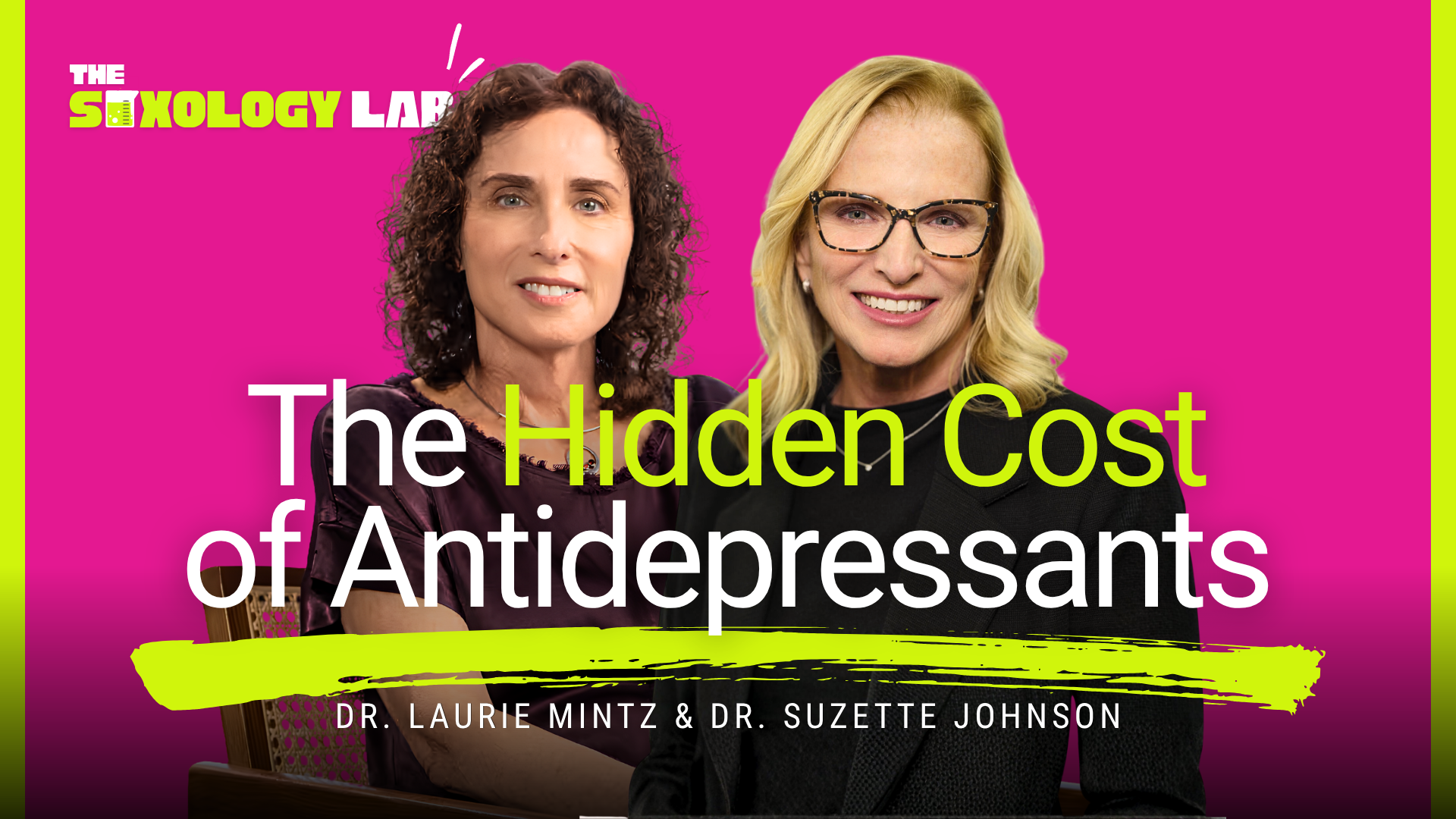
Millions of women take antidepressants to improve their mental health. But many discover an unexpected side effect nobody warned them about: sex no longer feels the same.
Desire fades. Arousal becomes difficult. Orgasms become delayed, muted, or disappear entirely.
For some women, it feels like they have to choose between their mental health and their sexual health. According to Dr. Laurie Mintz and Dr. Suzette Johnson, that choice should never have to exist.
What This Episode Explores
You do not have to choose between your sexual health and your mental health." — Dr. Suzette Johnson
Selective serotonin reuptake inhibitors (SSRIs) are among the most commonly prescribed medications in the world. They help millions of people manage depression, anxiety, postpartum mood disorders, and other mental health concerns.
Yet sexual side effects remain one of the least discussed consequences of these medications.
In this episode, Dr. Laurie Mintz and Dr. Suzette Johnson explain the neuroscience behind SSRI-induced sexual dysfunction, why so many women are never warned about it, and what options exist for restoring pleasure, arousal, and orgasm.
Most importantly, they challenge the idea that women should simply accept these side effects as the cost of treatment.
Guest Introduction
"Women want to orgasm. So they have every right to pursue orgasms, behaviorally, medically, and psychologically." — Dr. Laurie Mintz
Our guests are Dr. Laurie Mintz and Dr. Suzette Johnson, two leading voices in women's sexual health.
Dr. Laurie Mintz is a psychologist, sex therapist, professor emerita, and author of the bestselling books Becoming Cliterate and A Tired Woman's Guide to Passionate Sex. Her work focuses on closing the orgasm gap and helping women develop healthier, more empowered relationships with pleasure.
Dr. Suzette Johnson is a board-certified OB-GYN specializing in menopause, sexual medicine, and women's health. She has spent decades helping women navigate complex sexual concerns that often go overlooked in traditional medical care.
Together, they bring both professional expertise and personal experience to one of the most common yet misunderstood sexual health challenges facing women today.
3 Key Takeaways
SSRIs and SNRIs commonly affect desire, arousal, sensation, and orgasm, yet many patients are never informed about these side effects.
Sexual dysfunction caused by antidepressants is often treatable through medication adjustments, behavioral strategies, and sexual medicine interventions.
Women should never feel forced to choose between protecting their mental health and maintaining a satisfying sex life.
Who This Episode Is For
Women taking antidepressants who have noticed changes in their sexual response
Mental health professionals prescribing SSRIs and SNRIs
OB-GYNs, primary care providers, and healthcare professionals
Partners seeking to better understand medication-related sexual changes
Anyone interested in the intersection of mental health and sexual wellness
In This Episode, We Cover:
Why do SSRIs affect orgasm and arousal?
What is the relationship between serotonin and dopamine?
How common is SSRI-induced sexual dysfunction?
Why don't more doctors discuss these side effects?
What happens inside relationships when orgasm becomes difficult?
Are there treatments that can help restore sexual function?
Can women improve orgasm without stopping antidepressants?
Why is sexual pleasure still treated as optional in healthcare?
SSRI and Sexual Health Quick Answer Section
Do SSRIs cause sexual dysfunction?
Yes. SSRIs can affect multiple stages of sexual response, including desire, arousal, sensation, lubrication, and orgasm. Research suggests sexual side effects are significantly more common than many patients realize.
Can orgasm return while staying on antidepressants?
Often, yes. Depending on the individual situation, options may include medication adjustments, behavioral strategies, topical treatments, sexual health interventions, and working with trained sexual medicine and sexual health professionals.
Expanded Insight
"Pleasure is part of quality of life and quality of life is part of healthcare." — Dr. Suzette Johnson
One of the most important insights from this conversation is that sexual side effects are not "all in your head."
When SSRIs increase serotonin levels, they often suppress dopamine activity. Dopamine plays a major role in motivation, reward, arousal, and orgasm. As dopamine decreases, sexual response can become muted.
For many women, this creates a confusing experience.
Their attraction may still be present.
Their relationship may still be healthy.
Their desire to connect may still exist.
Yet their body no longer responds in the way it once did.
Dr. Mintz describes reaching the familiar point where orgasm feels inevitable—only for it to suddenly disappear. Dr. Johnson shares how experiencing this herself dramatically increased her empathy for patients facing the same challenge. You can read more about Dr. Laurie Mintz’s experience in this Women’s Health Magazine article, I’m A Sex Therapist Who ‘Lost’ Her Orgasm. Here’s How I Found It Again and What I Want Other Women to Know.
Unfortunately, biology is often only the beginning.
Once orgasm becomes difficult, many women begin worrying about whether it will happen again. Performance anxiety develops. Frustration builds. Some begin avoiding sexual situations altogether. Others fake orgasms to protect their partner's feelings or avoid difficult conversations.
This creates a second layer of distress on top of the medication's physiological effects.
The discussion also highlights a major gap in healthcare education.
Many providers receive little to no formal training in sexual health. Even specialists who regularly treat women may never learn how to assess orgasm difficulties, evaluate clitoral health, or discuss pleasure as part of routine care.
As a result, countless women suffer silently while assuming nothing can be done.
The reality is much more hopeful.
Both experts emphasize that sexual side effects deserve the same level of attention as any other quality-of-life concern. Women deserve treatment plans that support both emotional well-being and sexual well-being.
The goal is not choosing between mental health and pleasure.
The goal is having both.
Listen to the Episode
Listen on Apple Podcasts, Spotify, or YouTube to hear Dr. Laurie Mintz and Dr. Suzette Johnson discuss the hidden sexual side effects of antidepressants and the options available to women who want their pleasure back.
Related Topics
The Myth of 'Normal' in Intimacy and Relationships | Dr. Chris Donaghue | Episode 1
The Missing Science Behind Women's Health and Chronic Pain | Dr. Maria Uloko | Episode 2
Why Couples Struggle with Desire, Intimacy and Communication | Vanessa Marin | Episode 4-5
Want More Conversations Like This?
If you want deeper, research driven conversations about sex, relationships, and culture, join the Sexology Lab newsletter. Get expert insights, real world perspectives, and conversations that challenge outdated thinking and replace it with something more useful.
About The Sexology Lab
The Sexology Lab explores the intersection of sexual health, psychology, and culture. Through expert conversations, we challenge outdated narratives and provide research driven insights into relationships, desire, and human behavior.
